
How to Care for Your Evisu Jeans: Washing & Maintenance Tips

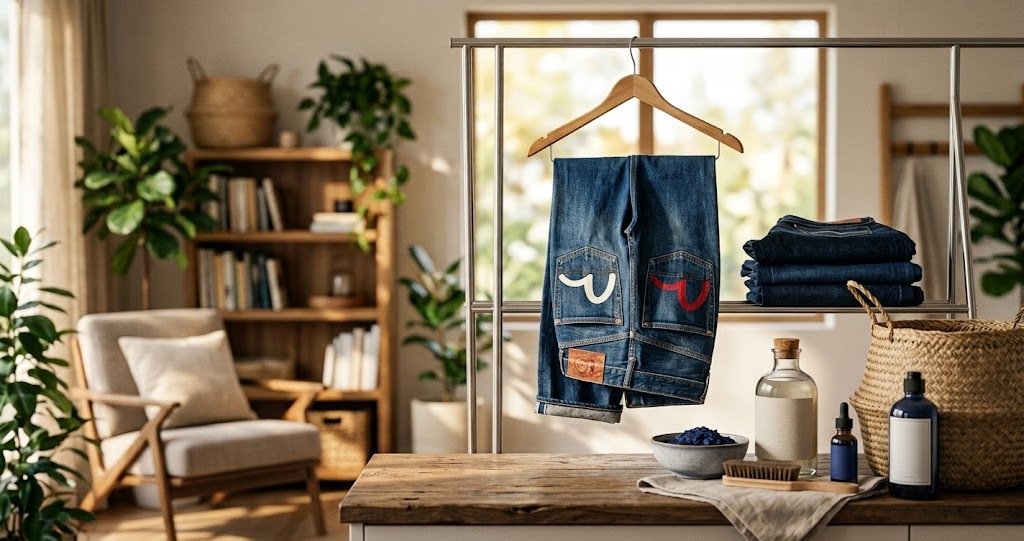
How to Care for Your Evisu Jeans: Washing & Maintenance Tips starts with one simple rule: clean your jeans gently, use the care label as your first reference, and keep unnecessary heat and aggressive chemicals away from the denim.
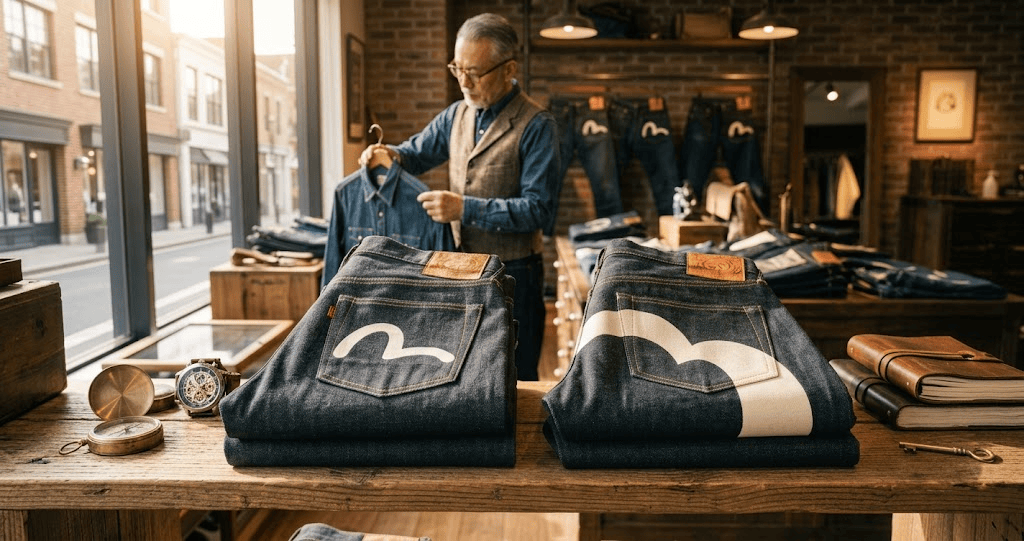
Evisu Jeans are valued for their distinctive denim, selvedge construction, detailed stitching, and signature back pocket designs. EVISU says its selvedge denim is produced on traditional shuttle looms, with denim commonly weighing around 12.2 to 13.5 ounces and using deep indigo coloration. That construction deserves more thoughtful care than simply throwing your favorite pair into a hot wash and dryer.
The good news is that caring for Evisu denim does not need to be complicated. The biggest mistakes are usually excessive heat, harsh detergent, unnecessary washing, rough agitation, and ignoring decorative details.
This guide explains how to wash Evisu Jeans, when to wash them, how to dry them, how to handle stains, how to protect the seagull artwork, and how to store them between wears.
Why Do Evisu Jeans Need Special Care?
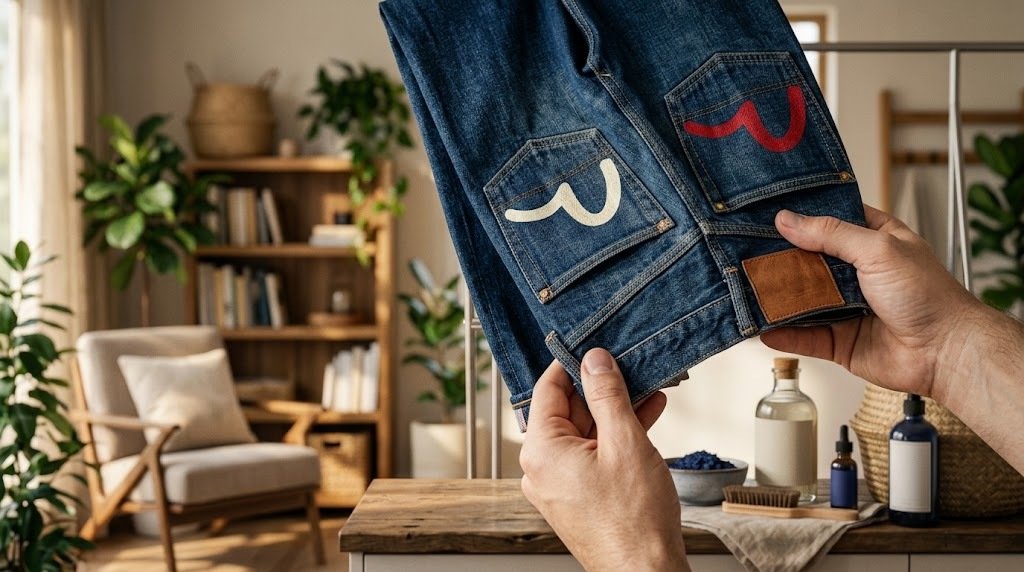
Evisu denim is designed around traditional denim craftsmanship rather than disposable fashion. EVISU highlights its selvedge construction, authentic materials, vintage detailing, specialized threads, buttons, labels, and signature pocket artwork.
That means washing affects more than cleanliness. It can also affect:
- Indigo color
- Natural fading
- Fabric texture
- Fit
- Stitching
- Printed or painted details
- Leather or paper patches
- Embroidery
- Decorative applications
Current EVISU product pages specifically warn that product color may change after washing. They also recommend washing some current styles inside out and separately on a delicate cold cycle, followed by hang drying.
The key lesson: do not assume every Evisu pair should be treated exactly like another pair of raw denim. Check the care label attached to your specific jeans first.
How Often Should You Wash Evisu Jeans?
There is no universal number of wears that works for everyone.
If your jeans are lightly worn in an office or casual setting, you may not need to wash them frequently. If you wear them outdoors, during physical work, in hot weather, or for long periods, they may need cleaning sooner.
For raw or minimally washed denim, enthusiasts often delay the first wash to encourage distinctive wear patterns. Older Evisu Jeans Care advice promoted several months of wear before the first soak, while modern denim brands generally emphasize washing based on actual need rather than following a rigid calendar.
A better approach is to ask:
- Are the jeans visibly dirty?
- Do they have an odor that airing cannot remove?
- Have they absorbed sweat or grime?
- Is there a stain that needs attention?
- Does the care label recommend a particular washing schedule or method?
Levi Strauss & Co. similarly recommends washing denim less frequently, using cold water, and line drying to help preserve fit and color.
Air Them Out Between Wears
If your Evisu Jeans are not dirty but simply need refreshing, hang them in a well ventilated area.
Avoid leaving sweaty denim crumpled on the floor or inside a closed closet. Air circulation can help reduce everyday odors without exposing the fabric to another wash.
Original practical insight: if you wear a pair several times per week, creating a simple rotation of two or three pairs can reduce the number of washes each pair needs. This gives the denim more time to air between wears and reduces repeated exposure to detergent and agitation.
How to Wash Evisu Jeans Properly
The safest washing method depends on your specific pair. Always check the sewn in care label before following a denim routine.
For current EVISU styles that specify machine washing, the brand recommends cold water, inside out, separately, delicate cycle, no bleach, and hang drying.
Option 1: Cold Machine Wash
If your care label permits machine washing:
- Empty all pockets.
- Fasten buttons and zippers.
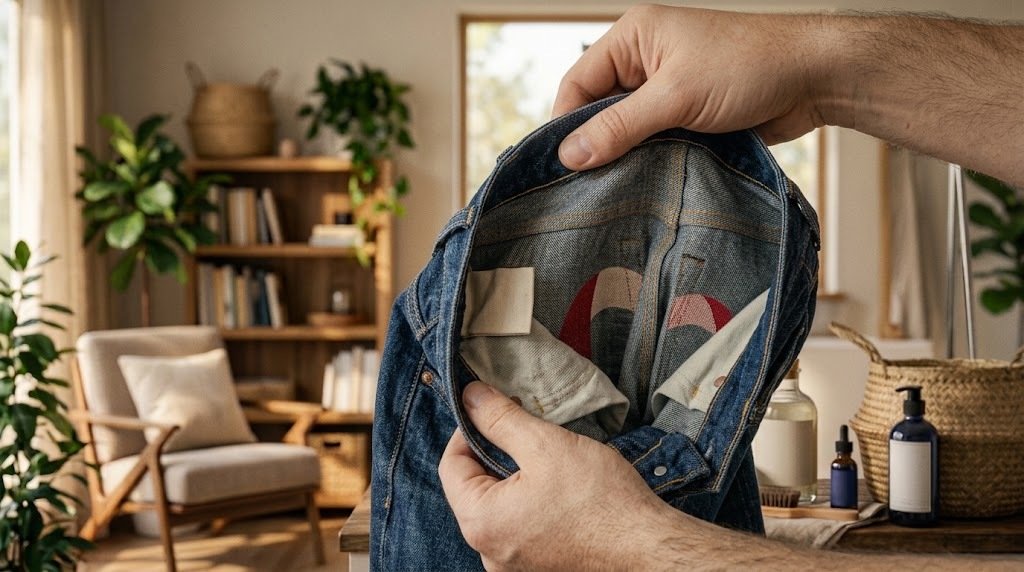
- Turn the jeans inside out.
- Wash them separately or only with compatible dark garments.
- Select cold water.
- Use a delicate or gentle cycle.
- Use a small amount of mild detergent.
- Avoid bleach and optical brighteners.
- Remove the jeans promptly after the cycle.
- Hang dry.
Washing inside out reduces direct friction against visible surfaces. It is especially useful when your jeans feature embroidery, prints, painted details, or other decorative elements.
Option 2: Gentle Hand Wash or Soak
For denim where hand washing is appropriate, a cold water soak can reduce mechanical agitation.
Place the jeans inside out in cool water and gently move them through the water. Avoid aggressive scrubbing. Rinse thoroughly and allow excess water to drain without twisting the jeans.
Gustin’s denim guidance also recommends turning raw denim inside out, soaking it in cold water with a small amount of mild detergent when necessary, and drip drying it.
What About Hot Water?
Hot water is generally a poor choice when your goal is preserving the original fit and color.
Heat can contribute to shrinkage and accelerated color loss. This is particularly important if you own a pair with a carefully developed fit or decorative finish.
Older Evisu focused guidance and modern denim care recommendations differ on some details, including water temperature. That is exactly why the current care label on your specific garment should override generalized internet advice.
What Detergent Should You Use for Evisu Jeans?
Use a mild detergent and avoid aggressive cleaning products.
Current EVISU care instructions specifically say not to use cleaning agents containing bleach or optical brighteners.
Avoid:
- Chlorine bleach
- Strong stain removers
- Optical brighteners
- Excessive detergent
- Harsh whitening products
- Abrasive cleaning methods
You do not need a large amount of detergent to clean denim. Too much detergent can also make rinsing more difficult.
Should You Use Vinegar or Salt?
Some older denim care guides recommend household vinegar and salt as a way to reduce dye bleeding. The older Evisu focused article included this technique.
However, it should not be treated as a universal requirement for modern Evisu Jeans.
If your jeans have a current manufacturer care label, follow that guidance instead of adding household ingredients automatically. There is no need to turn every wash into a denim experiment.
How Should You Dry Evisu Jeans?
Drying is one of the most important parts of Evisu Jeans maintenance.
Avoid the dryer unless the specific care instructions for your garment explicitly allow it.
Current EVISU product instructions repeatedly specify hang dry only and warn against steam ironing because it may cause irreversible damage.
The Best Drying Method
After washing:
- Do not wring the jeans aggressively.
- Gently reshape them.
- Hang them from the waistband or use an appropriate hanger.
- Keep them away from intense direct heat.
- Allow them to dry naturally.
- Make sure pockets are not folded awkwardly while wet.
Levi Strauss & Co. also recommends line drying rather than tumble drying because excessive dryer heat can contribute to shrinkage and fit changes.
Why Is the Dryer Risky?
High heat can change the fit and accelerate wear. It can also be particularly troublesome for jeans containing decorative treatments, patches, prints, or stretch fibers.
If preserving the original appearance is your priority, natural drying is the safer default.
How to Protect Evisu Seagulls, Prints, and Embroidery
The iconic back pocket artwork is one of the easiest parts of Evisu Jeans to damage through careless washing.
EVISU describes its back pocket seagull designs as an important part of the brand’s craftsmanship, with designs that can be hand painted, printed, or embroidered.
That distinction matters.
Painted or Printed Details
Avoid:
- Scrubbing directly over the artwork
- Ironing directly on prints
- Bleach
- High heat
- Aggressive machine cycles
Current EVISU care instructions specifically state not to iron on prints.
Embroidered Details
Embroidery can tolerate normal wear, but friction and harsh washing can gradually affect threads.
Turning the jeans inside out before washing is a simple protective step.
Leather and Paper Patches
Some Evisu Jeans may include leather or other patch materials. These can react differently to water and heat than cotton denim.
This is another reason to check the garment’s specific care instructions instead of applying one washing method to every Evisu model.
How to Remove Stains Without Washing the Whole Pair
A small stain does not always justify a complete wash.
For minor surface marks, gently dab the affected area rather than aggressively rubbing it.
A useful approach is:
- Identify the type of stain.
- Test your cleaning method on an inconspicuous area.
- Use a small amount of mild soap if appropriate.
- Dab gently.
- Rinse carefully.
- Let the area air dry.
- Check the result before repeating.
Be particularly cautious with dark indigo denim. Aggressive spot cleaning can create a lighter patch that is more noticeable than the original stain.
Gustin’s denim care guide similarly warns that excessive spot cleaning can remove dye and create an unwanted light area.
How to Store Evisu Jeans Correctly
Proper storage is simple but often overlooked.
Before putting your jeans away:
- Make sure they are completely dry.
- Empty the pockets.
- Avoid storing them in a damp environment.
- Keep them away from direct sunlight.
- Fold them neatly or hang them.
- Avoid crushing decorative details.
- Give frequently worn jeans enough ventilation.
If you prefer folding, use consistent folds instead of repeatedly creating sharp creases in the same place.
For long term storage, a cool, dry, dark closet is preferable to a humid area.
What Should You Do If Your Evisu Jeans Shrink?
Some denim can shrink after washing, particularly depending on the fabric construction and whether the denim has been prewashed or treated.
Do not deliberately use very hot water to shrink an Evisu pair unless the manufacturer specifically instructs you to do so.
If your jeans already became smaller after washing:
- Allow them to dry completely.
- Put them on when slightly comfortable to do so.
- Wear them normally.
- Give the fabric time to relax naturally.
Avoid repeatedly soaking and heating them in an attempt to force a particular fit.
If you are buying vintage or secondhand Evisu Jeans, pay attention to actual measurements rather than relying only on the tag size. Community discussions also highlight that tagged and actual measurements can differ significantly across denim models and eras.
Common Evisu Jeans Care Mistakes to Avoid
Here is the quick checklist:
Do not use hot water. Choose cold water when the care label permits.
Do not use bleach. It can damage color and materials.
Do not tumble dry unnecessarily. Hang drying is the safer option.
Do not iron artwork directly. EVISU specifically warns against ironing prints.
Do not wash every time you wear them. Wash based on actual dirt, odor, and garment instructions.
Do not scrub stains aggressively. You may remove indigo along with the stain.
Do not assume every Evisu pair is identical. Current commercial styles and older raw or vintage denim can have different care requirements.
Do not ignore the care label. It is the most relevant instruction for your exact garment.
A Simple Evisu Jeans Care Routine
If you want a practical routine without overthinking it, use this:
After wearing:
Hang the jeans somewhere ventilated.
When they become dirty or need washing:
Check the care label.
Before washing:
Empty pockets and turn the jeans inside out.
During washing:
Use cold water, a delicate cycle if machine washing is permitted, and mild detergent.
After washing:
Avoid wringing and hang dry.
Between washes:
Treat small stains carefully rather than automatically washing the entire pair.
For long term maintenance:
Repair small problems before they become large tears.
This approach combines the strongest common recommendations from EVISU’s current care instructions, established denim care guidance, and practical raw denim experience.
Final Thoughts: Make Your Evisu Jeans Last Longer
Good Evisu Jeans should not be treated as disposable clothing. Their appeal comes from the denim, construction, details, and the way the garment develops character through wear.
The most reliable strategy is simple: wash only when necessary, use cold water when permitted, turn the jeans inside out, avoid harsh chemicals, protect artwork, and hang dry.
Do not become so focused on preserving fades that you stop wearing or cleaning your jeans. Denim is meant to be worn. The goal is to keep your Evisu Jeans clean, comfortable, and structurally sound while allowing them to develop naturally over time.
For the most accurate instructions, always compare this general guide with the care label attached to your particular pair. Current EVISU styles can have specific requirements that differ from older raw denim routines.
Ready to care for your denim properly? Save this guide and use it the next time your Evisu Jeans need cleaning or maintenance.
FAQ Section
How often should you wash Evisu Jeans?
Wash Evisu Jeans when they are dirty, noticeably soiled, or develop persistent odor. Lightly worn denim may go longer between washes, while heavily used jeans may need more frequent cleaning.
Can you machine wash Evisu Jeans?
Yes, if the care label permits machine washing. Current EVISU product instructions for several styles recommend cold machine washing, turning the jeans inside out, washing separately, and using a delicate cycle.
Should Evisu Jeans be washed inside out?
Yes. Turning jeans inside out helps reduce direct friction against the visible denim, prints, embroidery, and other decorative details during washing.
Can you put Evisu Jeans in the dryer?
Hang drying is the safer choice. Current EVISU care instructions for several jeans specifically say hang dry only.
How do you prevent Evisu Jeans from fading?
Avoid unnecessary washing, use cold water when permitted, turn the jeans inside out, avoid bleach and optical brighteners, and keep them away from excessive heat.
Can you iron Evisu Jeans?
If ironing is necessary, follow the garment’s care label. Current EVISU instructions recommend a cool iron on the reverse side when needed and specifically say not to iron directly on prints.