

Raw Denim vs Washed Denim: Evisu Explained

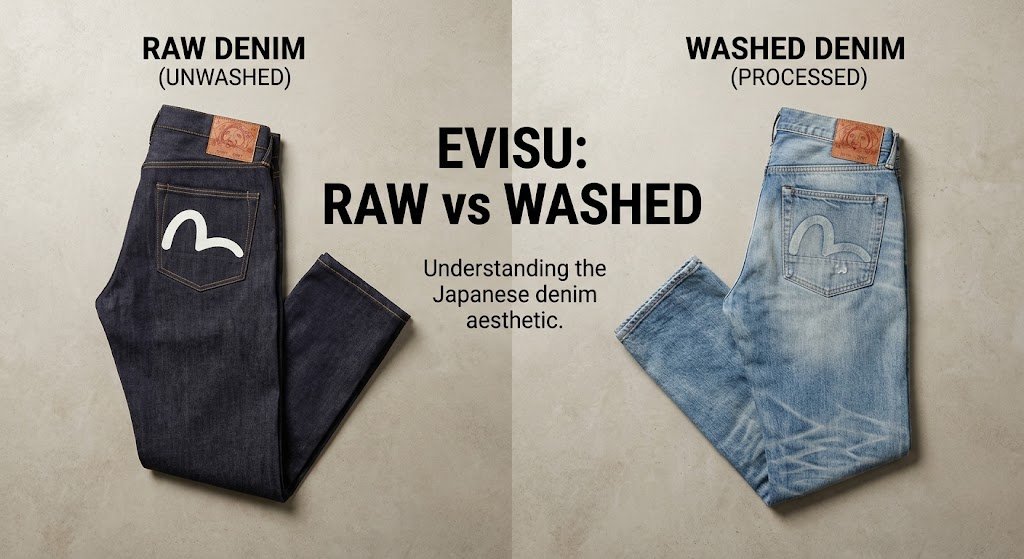
If you’re comparing Raw Denim vs Washed Denim: Evisu Explained, the simplest answer is this: raw EVISU denim gives you more control over how your jeans develop, while washed EVISU denim gives you comfort, predictable sizing, and a finished look from day one.
That difference matters because EVISU is not simply another denim label. Founded in Osaka, Japan, in 1991, EVISU built its reputation around premium Japanese denim, vintage-inspired construction, and its recognizable Seagull motif. The brand also emphasizes traditional shuttle-loom selvedge production across its denim heritage.
But there’s an important point many denim guides overlook: raw versus washed is not the same question as selvedge versus non-selvedge. A pair can be raw selvedge, washed selvedge, raw non-selvedge, or washed non-selvedge.
So, if you’re shopping for EVISU jeans in the U.S. and wondering which type makes more sense, this guide breaks down the differences without the denim jargon.
Raw Denim vs Washed Denim: What Is the Difference?
The biggest difference is what happens to the denim before you wear it.
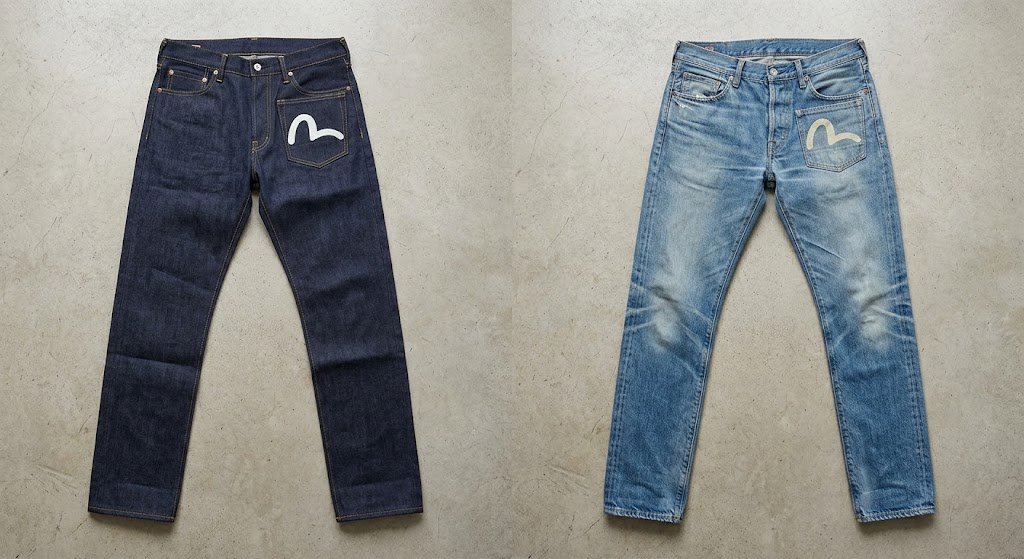
Raw denim is denim that has not undergone the typical garment-washing process after being produced. It generally arrives darker, stiffer, and more uniform in appearance. Because more of the original indigo remains on the surface, abrasion from normal wear gradually creates personalized fades.
Washed denim has already gone through a washing or finishing process. Depending on the design, this can soften the fabric, reduce excess dye, stabilize sizing, and create a specific shade or vintage appearance.
Here’s the practical difference:
| Feature | Raw EVISU Denim | Washed EVISU Denim |
|---|---|---|
| Initial feel | Stiff or crisp | Softer |
| Initial color | Usually deeper/darker | Usually lighter or varied |
| Fade potential | High | Already partially developed |
| Break-in time | Longer | Shorter |
| Shrinkage | Depends on construction | Usually more predictable |
| Indigo transfer | More likely | Generally lower |
| Maintenance | More involved | Easier |
| Best for | Fade enthusiasts | Comfort-focused buyers |
Neither is automatically better.
The right choice depends on whether you want to create the appearance of your jeans over time or buy that appearance already developed.
What Does Raw EVISU Denim Mean?
Raw EVISU denim is the option for someone who enjoys the evolution of denim.
A new pair can look almost excessively dark and feel surprisingly rigid. That’s intentional. As you wear the jeans, movement and friction gradually affect areas such as the thighs, knees, seat, pockets, and waistband.
These changes can produce familiar raw-denim patterns:
- Whiskers: Horizontal or diagonal fading around the upper thigh.
- Honeycombs: Creases and fades behind the knees.
- Stacking fades: Lines that develop where excess fabric gathers around the lower leg.
- Pocket fades: Wear patterns created by wallets, phones, keys, and other objects.
- Seat fades: Areas affected by sitting and repeated movement.
The appeal is that the finished appearance isn’t completely predetermined.
Your daily routine influences the result.
Someone who spends hours driving may develop different fading around the thighs and knees than someone who walks several miles every day. That’s one reason experienced denim enthusiasts treat heavily worn raw jeans almost like a record of personal use.
EVISU’s traditional denim identity fits naturally into this philosophy. The brand states that its selvedge denim is produced using traditional shuttle looms and that its deep indigo character comes from repeated dyeing processes.
Does Raw Denim Mean Selvedge?
No.
This is one of the most important distinctions in Evisu Explained.
Raw describes the finishing or washing state of the denim.
Selvedge describes the way the fabric is woven.
EVISU is strongly associated with selvedge denim, and the brand describes its selvedge as being made on narrow shuttle looms.
So don’t assume that every raw pair is selvedge or every selvedge pair is raw.
What Is Washed EVISU Denim?
Washed denim takes the opposite approach.
Instead of asking you to create the look through months of wear, the manufacturer uses washing and finishing techniques to establish the fabric’s appearance before the jeans reach you.
That can include:
- Rinsing
- Enzyme washing
- Stone washing
- Bleaching
- Distressing
- Abrasion treatments
- Other finishing techniques
The exact treatment varies by garment.
The major advantage is immediate wearability.
A washed pair can feel significantly softer than rigid raw denim, and the color may already have the faded character you’re looking for.
This is particularly useful if you want EVISU’s distinctive construction and branding but don’t want to spend months breaking in stiff denim.
Does Washed Denim Still Fade?
Yes.
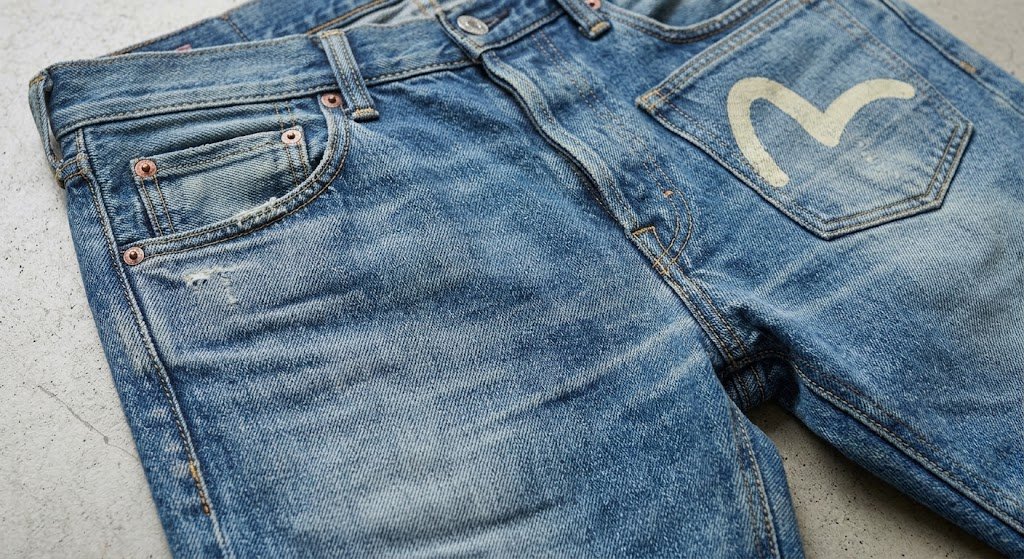
Washed denim can continue changing with wear. It simply starts from a different point.
A raw pair may begin with a deep, relatively uniform indigo surface and gradually develop contrast.
A washed pair may already have contrast, highlights, whiskering, or distressed areas. Additional wear can soften and alter those areas further.
So “washed” does not mean “it will never fade.”
It means some of the fading process has already happened before you bought the jeans.
Raw vs Washed EVISU: Which Has Better Fades?
If your main goal is dramatic, personalized fading, raw denim generally has the advantage.
Raw denim gives you a larger visual starting point. The contrast between the original indigo and exposed cotton becomes increasingly visible as the jeans experience friction.
Washed denim starts closer to the final appearance.
That doesn’t make washed denim inferior. It simply changes the experience.
Think of it like two approaches to photography:
- Raw denim: You create the image yourself over time.
- Washed denim: The image has already been developed, but you can still add your own character.
This is one area where competitor guides sometimes overstate the difference. Washed denim can still develop attractive wear patterns, particularly when the underlying fabric has strong texture.
The biggest difference is how much of the transformation you experience yourself.
A Simple EVISU Example
Imagine two identical-looking EVISU fits:
Pair A: Dark raw denim.
You wear it frequently for six months. The thighs become lighter, whiskers appear, the knees develop contrast, and the areas around the pockets show signs of your everyday routine.
Pair B: Factory-washed denim.
It arrives with a lighter blue tone and visible fading. You wear it for six months, and the existing fades soften while new wear develops.
At the end of six months, both pairs can look great.
But Pair A tells a much more personal story because most of its visible character developed while you were wearing it.
That is the strongest reason to choose raw.
Sanforized vs Unsanforized EVISU Denim
This is where choosing raw denim becomes more complicated.
“Raw” does not tell you everything you need to know about shrinkage.
You also need to determine whether the denim is sanforized or unsanforized.
Sanforized Denim
Sanforization is a pre-shrinking process designed to make fabric dimensions more stable.
In practical terms, sanforized denim is easier to size because much of the potential shrinkage has already been controlled.
If you’re buying your first pair of premium denim, sanforized raw denim can be the less stressful option.
You still need to follow the individual product’s measurements and care instructions, but you generally don’t face the dramatic shrink-to-fit calculation associated with loomstate denim.
Unsanforized Denim
Unsanforized denim has not undergone the same pre-shrinking process.
That means washing or soaking can cause noticeable dimensional changes.
Some unsanforized denim can shrink substantially, and the exact amount depends on the fabric, weave, treatment, water temperature, and drying method. Denimio notes that unsanforized non-wash denim can shrink around 5–10%, although individual fabrics vary.
This is why buying unsanforized raw denim requires more attention to measurements.
Never choose an unsanforized pair based only on the tag size.
Look at the actual garment measurements and the manufacturer’s shrinkage guidance.
What Is One-Wash Denim?
One-wash denim is another term you may encounter when researching EVISU or Japanese denim.
One-wash generally means the jeans have been washed once before reaching the customer.
The purpose is often to remove much of the initial shrinkage and make the jeans easier to size.
This is especially important with unsanforized denim.
Denimio specifically explains that one-washing unsanforized denim can remove much of the sizing uncertainty and make the jeans easier for newcomers to buy.
Rivet & Hide makes a similar distinction: one-washed denim should not automatically be confused with heavily washed or distressed denim. A one-wash can preserve much of the original character while simply removing initial shrinkage.
So:
Raw/non-wash: Maximum original character and more potential shrinkage.
One-wash: Initial wash has already been completed, making sizing easier.
Washed/distressed: Denim has received additional finishing to create a specific visual appearance.
These are not interchangeable terms.
Which EVISU Denim Should You Buy?
The answer depends on what you value most.
Choose Raw EVISU Denim If You Want:
- Personalized fading
- Deep original indigo
- A longer break-in journey
- Strong contrast potential
- A more traditional raw-denim experience
- The satisfaction of watching your jeans change
Raw is particularly appealing if you wear jeans frequently.
If you rotate ten pairs equally, each pair receives less wear. If you wear one pair several times per week, the fabric will naturally accumulate more visible wear.
Choose Washed EVISU Denim If You Want:
- Immediate comfort
- A broken-in feel
- Predictable appearance
- Less concern about early stiffness
- Lower initial indigo transfer
- A finished vintage or fashion-forward look
Washed denim is also a sensible choice if you don’t want denim care to become a hobby.
There is no award for making your jeans difficult to wear.
Raw Denim vs Washed Denim: Fit and Sizing
Fit should come before fading.
That’s especially true when buying premium denim online in the United States.
A common mistake is buying raw jeans too aggressively because someone recommends sizing down for a “perfect fade.”
Don’t do that without checking the actual measurements.
Consider:
- Waist measurement
- Front rise
- Thigh width
- Knee width
- Leg opening
- Inseam
- Fabric weight
- Sanforized or unsanforized status
- One-wash or non-wash treatment
For raw denim, remember that the fabric can feel dramatically different during the first several wears.
For unsanforized denim, you must account for shrinkage before deciding whether the initial fit is correct.
Best practice: Always compare the brand’s garment measurements with a pair of jeans you already own and like.
EVISU Jeans Size Guide
How Should You Care for Raw EVISU Denim?
Raw denim does not need to be treated like a museum piece.
It does, however, benefit from thoughtful washing.
For most raw denim:
- Turn the jeans inside out before washing.
- Use cold water unless the manufacturer specifies otherwise.
- Use a mild detergent when washing.
- Avoid aggressive bleaching products.
- Air dry rather than using high heat.
- Follow the care label for the specific EVISU garment.
Levi’s similarly recommends cold washing, turning denim inside out, using gentle detergent, and air drying to help preserve fit and color.
Most importantly, don’t blindly follow the internet rule that raw jeans should “never be washed.”
Dirt, sweat, and repeated wear can affect fabric longevity. The right washing frequency depends on the garment and how you use it.
EVISU’s own current product care instructions vary by garment. For example, some EVISU jeans specify cold washing, inside-out washing, delicate cycles, and hang drying, while other styles call for hand washing and additional precautions around prints or embroidery.
The product care label wins over generic denim advice.
Does Raw EVISU Denim Bleed Indigo?
It can.
Fresh, dark raw denim may transfer indigo to lighter materials through friction. This is known as crocking.
You may notice transfer on:
- White sneakers
- Light-colored shirts
- Upholstery
- Car seats
- Bags
- Skin
This doesn’t necessarily indicate poor quality.
It is a normal consequence of heavily dyed denim.
Washed denim generally has less loose surface dye because it has already undergone washing and finishing.
If you’re wearing raw EVISU denim for the first time, be especially careful with pale leather or fabric furniture.
Is Raw Denim More Durable Than Washed Denim?
It’s tempting to answer “yes,” but the real answer is more nuanced.
Raw denim can begin with a firm, compact feel, and it has not experienced the same garment-washing treatments as heavily washed denim.
However, durability depends on much more than whether jeans are raw or washed.
Important factors include:
- Cotton quality
- Fabric weight
- Weave density
- Yarn construction
- Stitching
- Seam construction
- Stress points
- Washing and drying habits
- How frequently you wear the jeans
A heavy raw pair isn’t automatically indestructible.
Likewise, a washed pair isn’t automatically fragile.
In fact, regular sensible cleaning can help prevent accumulated dirt from weakening fibers over time.
EVISU Raw vs Washed: Quick Decision Guide
If you’re still unsure, use this shortcut:
Buy raw if you say:
“I want to watch my jeans develop their own fades.”
Buy washed if you say:
“I want great-looking jeans that feel comfortable immediately.”
Buy one-wash if you say:
“I like the character of raw/unsanforized denim, but I don’t want to calculate major shrinkage.”
Be cautious with unsanforized non-wash if you say:
“I’ve never dealt with shrink-to-fit denim before.”
That last category isn’t bad. It’s simply less forgiving.
Why EVISU Is Different From Ordinary Washed Jeans
The washing debate becomes more interesting with EVISU because the brand’s identity isn’t based solely on color.
EVISU’s history is closely connected with Japanese denim craftsmanship, vintage construction, selvedge production, and its signature Seagull artwork. The company says its early jeans were hand-painted and that the brand was founded in Osaka in 1991.
Its current denim range also demonstrates that EVISU offers different constructions, fits, treatments, embroidery, and selvedge details rather than following one single denim formula.
That means you shouldn’t ask only:
“Is this EVISU raw or washed?”
Ask:
“What fabric is this, how was it treated, how will it fit after washing, and what kind of appearance do I want?”
That question leads to a much better purchase.
Raw Denim vs Washed Denim: Which Is Better for You?
There is no universal winner.
Raw EVISU denim is better for you if the process matters as much as the product. You want to start with deep indigo, break in the fabric yourself, and develop fades that reflect your lifestyle.
Washed EVISU denim is better if you prioritize comfort and appearance from the beginning. You get a more developed look without committing to months of rigid denim and careful break-in.
And one-wash denim sits between the two, especially when you’re dealing with unsanforized fabric. It can preserve much of the character of traditional denim while taking some of the sizing uncertainty away.
The most important lesson from this entire comparison is simple:
Raw does not automatically mean better, and washed does not automatically mean lower quality.
They are different denim experiences.
Choose based on how you actually plan to wear your jeans—not on what denim forums say you are “supposed” to prefer.
Final Verdict: Raw Denim vs Washed Denim, Evisu Explained
When comparing Raw Denim vs Washed Denim: Evisu Explained, think of raw denim as a blank canvas and washed denim as a canvas that already has a story.
Raw EVISU denim rewards patience. It starts darker and more rigid, then gradually records your movement through fades and wear.
Washed EVISU denim rewards convenience. It gives you softness, established color, and a finished appearance without requiring a long break-in period.
If you’re new to premium Japanese denim, a washed or one-wash option can be the easier introduction. If you’re excited by the idea of developing your own fades and don’t mind the learning curve, raw denim can be far more rewarding.
Before purchasing, check the fabric treatment, measurements, shrinkage expectations, and care instructions rather than relying on the word “raw” or “washed” alone.
That’s the real Evisu Explained answer—and it’s the key to buying the right pair for your wardrobe.
FAQ: Raw Denim vs Washed Denim: Evisu Explained
Is raw EVISU denim better than washed EVISU denim?
Not necessarily. Raw denim offers greater potential for personalized fading and a traditional break-in experience, while washed denim provides immediate comfort and a pre-developed appearance. The better option depends on your preferences.
Does raw EVISU denim shrink?
It depends on the specific fabric. Sanforized denim is pre-shrunk and generally has much less shrinkage, while unsanforized denim can shrink substantially during its first wash or soak. Always check the product’s specifications before buying.
Is EVISU denim selvedge?
EVISU has a strong heritage of premium selvedge denim and states that its selvedge jeans are made using traditional shuttle looms. However, the exact construction can vary by product, so check the specifications for the particular pair you’re considering.
What is the difference between raw and one-wash EVISU denim?
Raw or non-wash denim has not received the initial wash that removes shrinkage. One-wash denim has been washed once, usually making its dimensions more predictable and the fabric somewhat softer. This distinction is especially important with unsanforized denim.
Should you wash raw EVISU jeans?
Yes, eventually. The exact timing depends on your wear habits and the garment’s care instructions. When washing, follow EVISU’s product-specific care label rather than relying solely on generic raw-denim rules. EVISU’s current products can have different care requirements.
Do washed EVISU jeans still fade?
Yes. Washed denim can continue to change with wear, although some of the fading and color development has already happened during manufacturing.