

Evisu Jeans vs True Religion: A Detailed Comparison

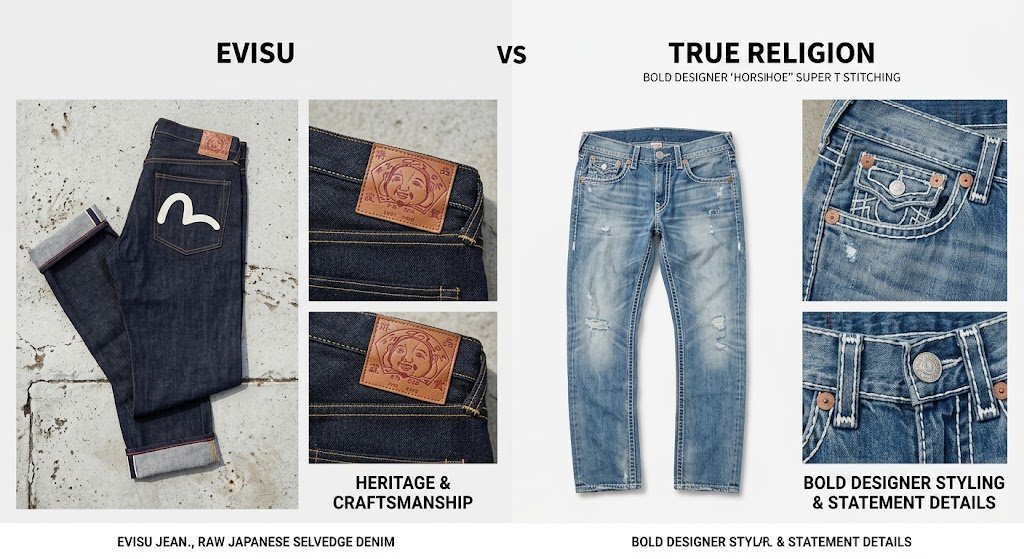
Evisu Jeans vs True Religion: A Detailed Comparison comes down to two very different interpretations of premium denim. Evisu is strongly associated with Japanese denim culture, selvedge construction, heritage craftsmanship, and its recognizable hand-painted seagull motif, while True Religion built its identity around bold designer styling, distinctive stitching, and statement-making fits.
Quick answer: Choose Evisu if you prioritize Japanese denim heritage, craftsmanship, distinctive construction, and collector appeal. Choose True Religion if you want a more immediately recognizable designer look, prominent detailing, and a fashion-forward silhouette.
Both brands can make excellent additions to a denim wardrobe, but they appeal to different buyers. The better choice depends less on which logo you prefer and more on what you expect from your jeans.
Evisu Jeans vs True Religion: Brand Heritage and Identity
The first major difference appears in the brands’ histories.
Evisu’s Japanese denim heritage
Evisu was founded in Osaka, Japan, in 1991 and takes its name from Ebisu, the Japanese god of prosperity. According to Evisu’s own history, the brand originally produced only around 14 pairs of jeans per day, with the famous seagull logo being hand-painted onto the jeans.
That early emphasis on handwork helped establish Evisu as a recognizable name in Japanese premium denim. The brand also became associated with the revival of interest in vintage-inspired denim and traditional denim craftsmanship.
Complete guide to Japanese denim
For denim enthusiasts, this heritage matters because Evisu is not simply selling jeans with a decorative logo. The brand’s identity is closely connected to Japanese denim culture, traditional techniques, and the visual character of premium denim.
True Religion’s American designer-denim story
True Religion entered the market later, in 2002, founded by Jeff Lubell and Kym Gold in California. The company positioned itself around premium designer jeans and quickly became known for highly recognizable details and fashion-oriented silhouettes.
Its history is very different from Evisu’s. Rather than building its reputation primarily around Japanese denim tradition, True Religion became a major designer-denim name through its distinctive aesthetic and strong presence in fashion retail.
The brand’s early production was approximately 14,000 pairs of jeans in 2002, and its flagship store opened in Manhattan Beach in 2005.
This makes the comparison interesting: Evisu’s story is rooted in Japanese denim heritage, while True Religion’s story is rooted in American designer fashion.
How Do Evisu and True Religion Jeans Differ?
The most important difference is not simply the logo. It is the design philosophy.
| Feature | Evisu | True Religion |
|---|---|---|
| Heritage | Japanese denim | American designer denim |
| Founded | 1991 | 2002 |
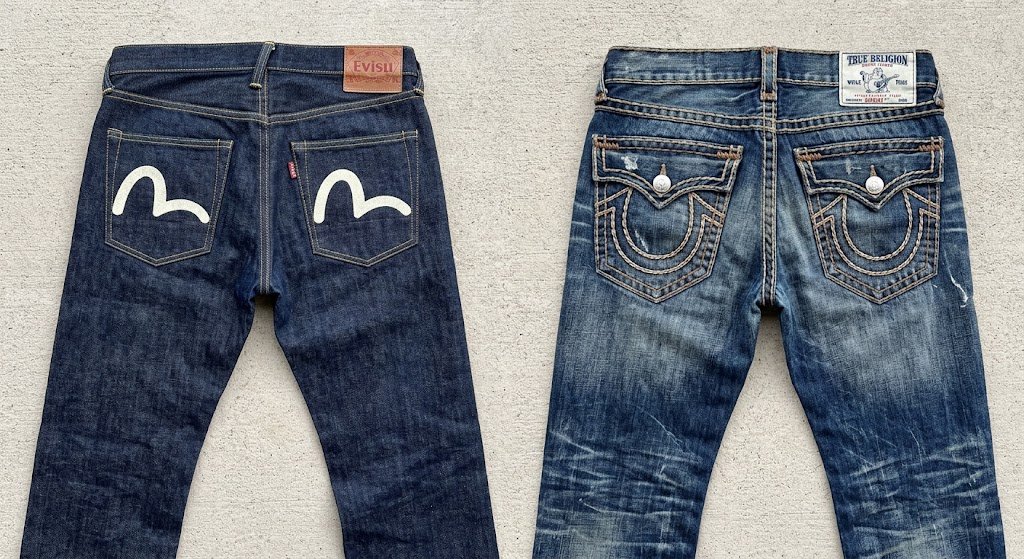
| Signature detail | Seagull/Daicock motif | Horseshoe-style branding and bold stitching |
| Design personality | Heritage + streetwear | Fashion-forward + statement style |
| Denim appeal | Craftsmanship and character | Visual impact and styling |
| Best for | Denim enthusiasts and collectors | Designer-fashion fans |
| Styling | Japanese/streetwear/heritage | Y2K, streetwear, casual designer looks |
| Main attraction | Fabric, construction, detailing | Silhouette, branding, detailing |
The table should not be interpreted as saying that every Evisu jean is selvedge or every True Religion jean uses one particular construction. Denim specifications vary by collection, model, and production period.
That distinction is important when buying either brand.
Evisu vs True Religion: Denim Quality and Construction
If your primary concern is the denim itself, Evisu generally has the stronger heritage story.
Why Evisu stands out
Evisu is particularly associated with Japanese selvedge denim. Selvedge denim is woven on traditional narrow-width shuttle looms, producing a clean finished edge along the fabric. It is a construction method rather than simply a color or wash.
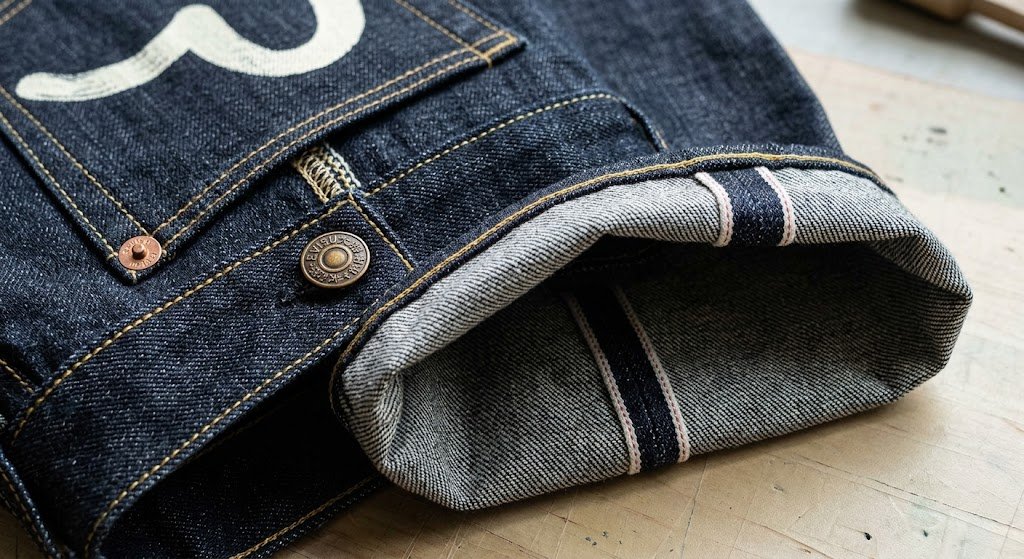
One important point that is often missed in denim comparisons is that raw denim and selvedge denim are not the same thing.
Raw denim describes the finishing state of the fabric: it has not been pre-washed or treated in the same way as washed denim. Selvedge describes how the fabric is woven.
A pair can therefore be:
- Raw and selvedge
- Raw but not selvedge
- Selvedge but washed
- Neither raw nor selvedge
This distinction is especially useful when comparing premium denim.
Raw Denim vs Washed Denim guide
What makes True Religion different?
True Religion’s appeal is less about being a traditional selvedge-denim specialist and more about its recognizable designer construction.
The brand became famous for oversized stitching, prominent pocket designs, curved details, distinctive washes, and bold branding. These details can make the jeans immediately recognizable even from a distance.
For someone who wants denim that acts almost like a statement piece, this can be an advantage.
For someone who studies fabric weight, weaving, fades, stitching, and construction, Evisu is likely to be more interesting.
Which Brand Has Better Fit and Style?
There is no universal winner because both brands offer different approaches to fit.
Evisu’s current denim range includes multiple silhouettes, including slim, taper, regular, relaxed, loose, and wide-leg options. This means Evisu is not limited to one traditional Japanese fit.
True Religion is better known for dramatic designer silhouettes and the type of styling that became particularly influential in the 2000s and Y2K fashion era.
Choose Evisu if you like:
- Japanese streetwear
- Heritage-inspired outfits
- Selvedge denim
- Strong fabric character
- Vintage-inspired styling
- Statement seagull details
- Denim that can become more personalized through wear
Choose True Religion if you like:
- Y2K fashion
- Oversized or relaxed styling
- Bold pocket details
- Heavy contrast stitching
- Designer streetwear
- More obvious branding
- Fashion-focused denim outfits
Your body shape should also influence the decision.
A dramatic pocket design can visually add width or draw attention toward the hips and seat. Likewise, a wider Evisu silhouette can create a completely different visual balance from a slim or tapered model.
That is why comparing only waist measurements is not enough. Always check the actual model’s rise, thigh, leg opening, inseam, and fabric composition.
Evisu Jeans vs True Religion: Durability and Aging
Durability is another area where the two brands should not be judged solely by price.
Heavy or tightly woven denim can feel more substantial and may develop attractive wear patterns with regular use. With premium denim, part of the appeal is watching the jeans change with the wearer.
Evisu’s heritage makes this especially relevant for denim enthusiasts. Raw or minimally processed denim can develop creases and fading patterns based on how you sit, walk, work, carry items, and cuff the jeans.
That means two people can wear the same model and eventually end up with noticeably different-looking jeans.
This is one of the strongest reasons enthusiasts enjoy raw denim.
True Religion, on the other hand, often makes the visual character part of the product from the beginning. Distressing, washes, stitching, and pocket details can deliver an immediately finished look without waiting months for the denim to develop its personality.
A practical example
Imagine two buyers spend the same amount of money on premium jeans.
Buyer A wants to wear one pair repeatedly, develop personalized fades, and appreciate fabric and construction. Evisu is likely the better match.
Buyer B wants the jeans to make a visual impact immediately with distinctive stitching, pockets, and designer styling. True Religion may provide the better experience.
Neither buyer is wrong. They simply value different things.
Which Jeans Are Better for Everyday Wear?
For everyday wear, fit should come before brand reputation.
A perfectly constructed pair of jeans that you dislike wearing is not a better purchase than a comfortable pair that fits your lifestyle.
Before buying, check:
- Waist: Does it sit securely without excessive pressure?
- Rise: Is the front and back rise comfortable when sitting?
- Thigh: Can you move naturally?
- Knee: Does the leg shape match your preferred silhouette?
- Leg opening: Does it work with your shoes?
- Inseam: Is there enough length for your preferred break or cuff?
- Fabric: Do you want rigid, structured denim or softer washed denim?
Evisu can work extremely well for people who want a long-term denim piece that becomes more personal through wear.
True Religion can be a better everyday choice for someone whose wardrobe is built around statement denim, sneakers, oversized tops, and streetwear-inspired outfits.
How Should You Care for Evisu and True Religion Jeans?
Premium denim lasts longer when it is treated correctly.
For raw or selvedge denim, avoid assuming that frequent washing is necessary. Cold water, gentle cleaning, and air drying are safer approaches for preserving color and minimizing unnecessary shrinkage.
Levi’s denim-care guidance similarly recommends cold water, gentle detergent, and air drying, while its raw-denim guidance recommends careful hand washing and avoiding wringing.
For any specific Evisu or True Religion pair, however, follow the garment’s care label first because fabric composition and finishing can differ between models.
Simple denim-care routine
- Turn jeans inside out before washing.
- Use cold water.
- Choose a gentle cycle or hand wash when appropriate.
- Avoid harsh detergents.
- Do not wring raw denim aggressively.
- Air dry instead of using high heat.
- Spot-clean small marks when possible.
- Check the care label before applying any special treatment.
One common mistake is treating every premium jean as if it were raw denim. A heavily washed or stretch-denim model does not necessarily require the same routine as unsanforized raw selvedge denim.
Which Is More Worth It: Evisu or True Religion?
This is where the comparison becomes subjective.
Evisu is worth it if you value:
- Japanese denim heritage
- Selvedge construction
- Craftsmanship
- Unique fading potential
- Collectibility
- Heritage and streetwear styling
- Detailed denim construction
True Religion is worth it if you value:
- Designer fashion
- Bold visual details
- Recognizable branding
- Y2K influence
- Dramatic stitching
- Statement silhouettes
- Ready-to-wear fashion impact
The higher price of premium denim should not automatically be interpreted as proof that one pair is objectively better.
A useful way to think about value is:
Value = construction + fabric + fit + design + wearability + personal preference.
If you love Evisu’s construction but never wear the jeans, the theoretical craftsmanship has little practical value.
If you love True Religion’s styling and wear the jeans every week, they may provide more value to you even if a denim enthusiast would prefer a different construction.
Evisu Jeans vs True Religion: Which One Should You Buy?
The simplest answer is this:
Buy Evisu if the denim itself is part of the experience. Buy True Religion if the fashion statement is the experience.
Evisu is the stronger choice for buyers who are fascinated by Japanese denim, selvedge construction, vintage inspiration, and the way jeans evolve through wear.
True Religion is the stronger choice for buyers who want bold designer denim, recognizable detailing, and a strong fashion identity.
If you are new to premium denim, do not buy solely because one brand is more expensive or more hyped. Start with the fit, then examine fabric and construction, and finally decide whether the design fits your wardrobe.
Final Verdict
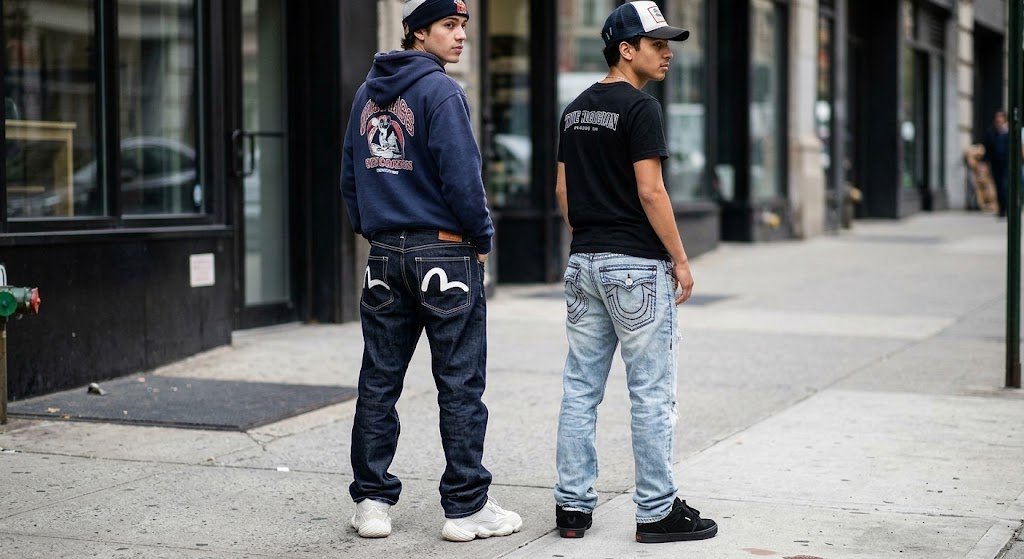
Evisu wins for Japanese denim heritage, selvedge appeal, craftsmanship, and denim-enthusiast culture. True Religion wins for bold designer styling, recognizable detailing, and Y2K-inspired fashion.
Neither brand is automatically better for everyone.
If your goal is to own jeans that can become a personal record of how you wear them, Evisu deserves serious consideration. If your goal is to make denim a prominent part of your outfit immediately, True Religion remains a compelling option.
The smartest purchase is ultimately the pair whose fit, fabric, construction, and aesthetic match how you actually dress.
Before purchasing, compare the exact model rather than judging the entire brand from one pair. That single step can prevent an expensive mistake.
Ready to choose? Start with your preferred fit, then compare fabric, construction, wash, and detailing before making the final decision.
Frequently Asked Questions
Are Evisu jeans better than True Religion jeans?
Evisu is generally the better choice for buyers who prioritize Japanese denim heritage, selvedge construction, craftsmanship, and personalized fading. True Religion is better suited to buyers who prioritize bold designer styling, distinctive stitching, and statement-making fashion.
Is Evisu considered a luxury denim brand?
Evisu occupies the premium end of denim and has a strong reputation in Japanese denim culture. Its heritage, detailed construction, signature seagull motif, and association with premium Japanese denim contribute to its collector and enthusiast appeal.
Is True Religion still popular?
True Religion remains a recognizable designer-denim brand, particularly among shoppers interested in Y2K, streetwear, and nostalgic 2000s fashion. Its distinctive stitching and pocket designs remain central to its visual identity.
Are Evisu jeans selvedge?
Evisu has a strong association with Japanese selvedge denim, but buyers should check the specifications of the individual model because not every pair in a broad brand catalog should automatically be assumed to have identical construction.
Which brand is better for raw denim?
Evisu is generally the more natural choice for someone specifically interested in raw-denim culture and Japanese denim craftsmanship. However, the exact fabric and finishing should always be checked on the individual pair before purchase.
Which brand is better for Y2K style?
True Religion is the stronger choice for a classic Y2K-inspired look because its bold stitching, distinctive pocket details, and designer-denim aesthetic are strongly associated with that fashion era. Evisu can also work well in modern Japanese streetwear and oversized outfits.