

Evisu Jeans Price Guide: What You’re Really Paying For

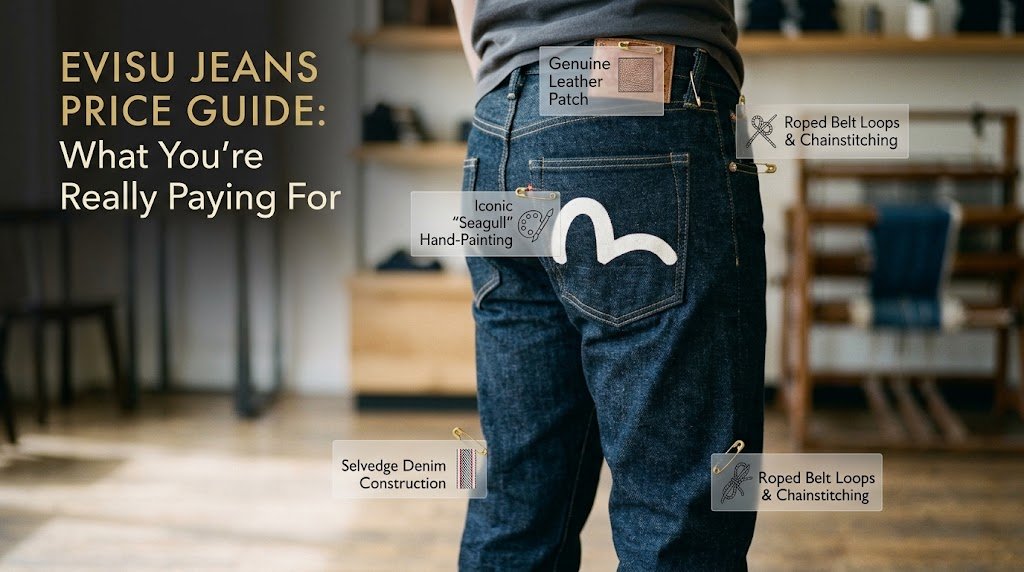
Evisu Jeans Price Guide: What You’re Really Paying For comes down to more than a famous logo. The price of a pair can reflect the denim construction, manufacturing location, detailing, fit, collection, and whether you are buying new, vintage, or resale denim.
In 2026, that distinction matters because EVISU’s official U.S. store carries everything from relatively straightforward denim to highly decorated Japanese-made pieces. Current official examples include men’s jeans priced around $425–$449, while Japanese-market examples can range from roughly ¥39,050 to ¥67,100, depending on construction and design.
So, are expensive Evisu jeans actually worth it?
They can be—if you value the specific characteristics that make the pair expensive. If you’re primarily paying for the recognizable seagull graphic, a cheaper vintage or secondhand pair may provide the look without the price of a premium current-season model.
What Makes Evisu Jeans Expensive?
The first thing to understand is that Evisu is not simply charging more because it is a recognizable fashion label.
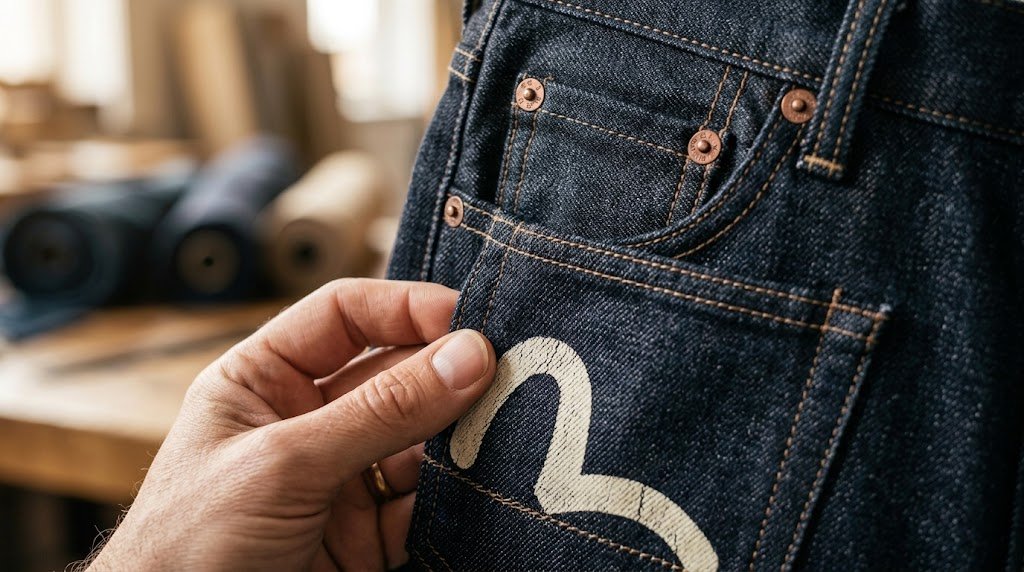
The brand was founded in Osaka in 1991, and EVISU says its early jeans were individually hand-painted with the now-famous seagull logo. Its heritage is closely tied to traditional Japanese denim and a deliberate focus on craftsmanship.
Several factors can influence the final price.
1. Japanese denim and construction
Japanese denim has a strong reputation among enthusiasts because manufacturers have preserved techniques associated with vintage denim production.
Depending on the specific Evisu model, you may encounter Japanese-made denim, selvedge construction, different fabric weights, distinctive washes, and specialized finishing.
But there is an important buying lesson here:
Do not assume every Evisu jean has identical construction simply because the Evisu name appears on the label.
The exact product description matters.
2. Seagull and Daicock detailing
The back-pocket artwork is one of Evisu’s most recognizable features.
Some pairs have relatively restrained Seagull branding, while others use large painted, printed, embroidered, or otherwise elaborate graphics. Daicock designs can also create a much stronger visual statement.
That extra detailing affects the appearance—and potentially the price—of a pair.
3. Production and craftsmanship
Labor-intensive finishing takes more time than producing a completely standardized mass-market jean.
EVISU’s own history notes that its early production was extremely small, with approximately 14 pairs produced per day and hand-painted seagulls on the jeans.
That historical detail helps explain the brand’s DNA, although modern production should not automatically be assumed to use exactly the same process as the earliest pairs.
Evisu Jeans Price Guide: What Does $400+ Buy You?
A useful way to understand Evisu pricing is to stop asking, “Why are these jeans so expensive?” and instead ask:
“What characteristics does this particular pair have that justify its price?”
Current official listings provide a useful illustration.
On EVISU’s U.S. site, a Light-washed Seagull Print Regular Fit Jeans #2020 is currently listed at $425, while a Flaming Daicock Print Regular Fit Jeans is listed at $449.
On the Japanese site, current examples include a Classic 5-Pocket Jeans model at ¥39,050, while more decorated models reach ¥60,500–¥67,100.
This suggests an important pricing pattern:
| What you’re buying | Why it can cost more |
|---|---|
| Basic denim | Fabric and construction |
| Selvedge denim | Specialized denim production |
| Japanese-made pair | Manufacturing and craftsmanship |
| Seagull detailing | Signature finishing/design |
| Daicock graphics | More elaborate visual treatment |
| Distressed/patchwork design | Additional finishing |
| Limited or collectible pair | Scarcity and demand |
| Vintage pair | Age, condition, rarity and provenance |
The key is that price is not a single quality score.
A $425 pair isn’t automatically “better” for every buyer than a $200 pair. It may simply offer a combination of construction, decoration, scarcity, and design that appeals to a particular customer.
Which Evisu Jeans Are Worth the Money?
There isn’t one universally best Evisu jean. The right choice depends on what you want from the purchase.
Best for a classic Evisu look
Choose a pair with recognizable Seagull detailing and a traditional denim silhouette.
This is the sensible option if your main reason for buying Evisu is its visual identity.
Look for:
- Classic Seagull artwork
- Indigo or dark denim
- A fit that works with your existing wardrobe
- Moderate detailing rather than excessive graphics
Best Evisu Jeans for Men
Best for statement streetwear
If you want the jeans to be the focal point of an outfit, heavily decorated Daicock, embroidered, patchwork, or distressed designs make more sense.
Current official collections demonstrate how dramatically Evisu can vary—from relatively classic jeans to heavily decorated pieces.
The trade-off is versatility.
A highly graphic pair can look fantastic with a simple top, but it may be harder to style repeatedly than a dark, understated model.
Best for denim enthusiasts
For a denim-focused buyer, construction should come before graphics.
Check:
- Where the jeans were manufactured
- Whether the product is selvedge
- Fabric composition
- Denim weight, when disclosed
- Sanforized versus unsanforized construction
- Stitching and hardware
- The specific fit
- Care instructions
This approach prevents you from paying a premium primarily for decoration when what you really want is premium denim construction.
How Much Should You Pay for Evisu Jeans?
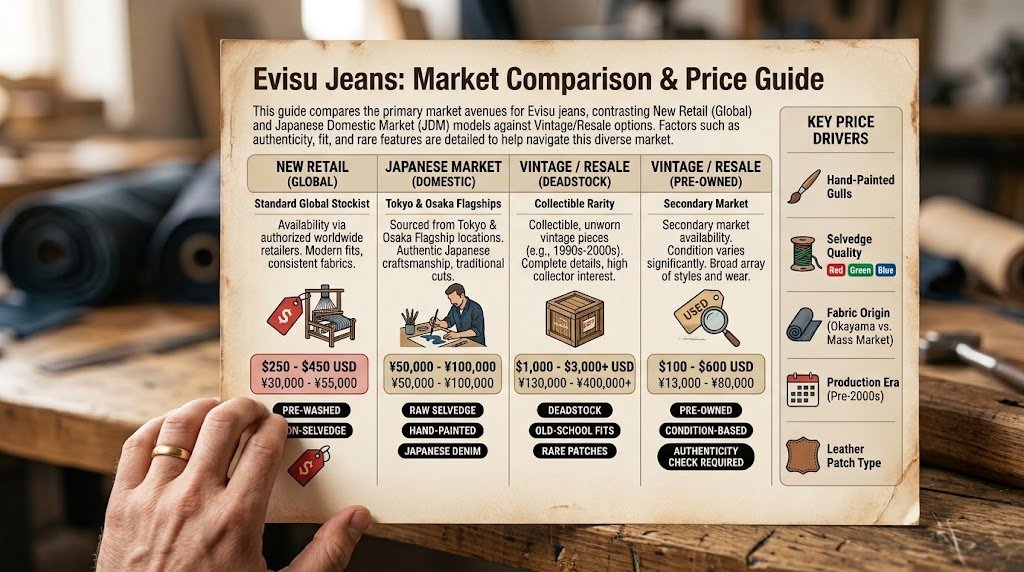
There is no single “correct” Evisu price because new retail, sale, vintage, and resale markets are very different.
A practical way to think about the market is:
Entry-level or discounted pairs
These can make sense for someone who wants the brand aesthetic without investing in a highly specialized collector piece.
Premium new-season pairs
Current official U.S. examples around $425–$449 demonstrate where some premium contemporary models sit.
Japanese-market premium denim
Japanese-market pricing varies considerably. Current official examples show models around ¥39,050, ¥60,500, and ¥67,100.
Vintage and resale
The resale market can be dramatically less predictable.
For example, current eBay listings include Evisu jeans at prices ranging from under $100 to several hundred dollars, depending on the particular pair, condition, rarity, size, and seller.
That means a resale price should never be treated as proof of retail value.
Why Vintage Evisu Jeans Can Be So Different in Price
Vintage Evisu is where pricing becomes particularly interesting.
Two pairs may both carry the Evisu name while having very different collector appeal.
Factors that can influence vintage value include:
- Age
- Production era
- Country of manufacture
- Selvedge construction
- Originality of graphics
- Condition
- Size
- Wash and fading
- Rarity
- Provenance
- Whether alterations have been made
A heavily worn pair isn’t necessarily worthless. In some cases, natural fading is part of what makes vintage denim attractive.
But condition matters.
A collector may prefer authentic wear developed naturally over years of use rather than artificial distressing. Conversely, someone shopping purely for streetwear may care more about the overall look than provenance.
The “rare” label needs scrutiny
One of the biggest mistakes in the resale market is assuming that every unusual Evisu design is automatically valuable.
Unusual does not always mean rare, and rare does not always mean desirable.
Before paying a premium, compare the exact model, tags, measurements, construction, graphics, and condition rather than relying on a seller’s headline.
What Are You Really Paying For?
This is the most important section of the entire Evisu Jeans Price Guide.
When you see a $400+ price tag, divide it mentally into several components.
1. The denim
Premium denim is one part of the equation.
2. Manufacturing
Where and how the jeans are produced can affect cost.
3. Design
Evisu’s distinctive artwork is a major part of the brand’s identity.
4. Labor
Specialized finishing and detailed construction require labor.
5. Brand heritage
Evisu has more than three decades of history behind the name. The brand’s official history traces its origins to Osaka in 1991.
6. Scarcity
Limited production, discontinued designs, unusual sizes, or vintage examples can create additional demand.
7. Fashion value
This is harder to measure but impossible to ignore.
You’re not only purchasing fabric and thread. You’re purchasing a particular visual language associated with Japanese denim and streetwear culture.
British GQ has documented Evisu’s role in the rise of Japanese denim and its crossover into international fashion and hip-hop culture.
Evisu Fit Matters More Than the Price Tag
One area many price guides overlook is fit.
EVISU currently categorizes denim into silhouettes including Slim, Taper, Regular, Relaxed, Loose, and Wide Leg.
That matters because the same price can produce very different wardrobe value.
Regular
A balanced choice for everyday wear. It gives you structure without feeling extremely narrow or oversized.
Relaxed
Better for a more comfortable, laid-back silhouette.
Loose
Works particularly well if your style leans toward contemporary streetwear.
Wide leg
A stronger fashion statement and less universally versatile.
Taper
Useful when you want more room through the upper leg while keeping a narrower lower-leg profile.
Original buying insight: if you’re evaluating value, calculate cost per useful wear, not simply the purchase price.
For example, imagine two pairs:
- Pair A: $450 and worn 45 times per year
- Pair B: $250 and worn 10 times per year
After two years, Pair A costs about $5 per wear, while Pair B costs about $12.50 per wear.
That’s not a claim that the $450 pair is objectively better. It demonstrates why wardrobe versatility can matter more than the sticker price.
How to Buy Evisu Jeans Without Overpaying
Before buying, use this checklist.
Step 1: Identify the exact model
Don’t stop at “Evisu jeans.” Find the model number, fit, collection, and design.
Step 2: Check the manufacturing information
If Japanese-made construction matters to you, verify the product details instead of assuming.
Step 3: Compare the official retail price
Start with the current official EVISU store. Its U.S. site notes that prices, currencies, and product assortment can vary by region.
Step 4: Compare the measurements
Do not rely solely on your normal jeans size. Compare actual waist, rise, thigh, leg opening, and inseam measurements when available.
Step 5: Inspect resale pairs carefully
For vintage or secondhand purchases, ask for:
- Clear tag photographs
- Pocket artwork photographs
- Waist and inseam measurements
- Fabric and construction details
- Condition information
- Any alterations or repairs
Step 6: Decide whether the design is worth the premium
If you dislike the large graphic, don’t pay extra for it simply because another buyer might value it.
Evisu Jeans vs. Ordinary Premium Denim
Evisu occupies an unusual position.
It combines denim craftsmanship with highly recognizable fashion graphics.
A minimalist Japanese denim brand might put almost all of its emphasis on fabric and construction. A mainstream designer label may emphasize branding and seasonal fashion. Evisu often sits somewhere between those approaches.
That is why its value is subjective.
If you want subtle jeans that disappear into an outfit, Evisu may not be the most logical choice.
If you want denim that is part of the outfit, its visual identity becomes a significant part of the value proposition.
The brand itself describes EVISU as an original premium Japanese selvage denim brand and emphasizes its historical use of hand-painted seagull detailing.
EVISU official history
Are Evisu Jeans Worth the Price?
Evisu jeans are worth the price when the buyer values their combination of denim construction, design, craftsmanship, heritage, and distinctive styling.
They are less compelling if you’re simply looking for the most economical pair of durable jeans.
The smartest purchase isn’t necessarily the most expensive model.
Instead, look for the pair where these five things overlap:
- You like the fit.
- You genuinely like the artwork.
- The construction matches your expectations.
- The price fits your budget.
- You expect to wear the jeans regularly.
That final point is easy to overlook.
A $400 pair sitting in a closet isn’t good value. A $400 pair that becomes one of the most-worn pieces in your wardrobe can make much more sense.

Final Verdict: What You’re Really Paying For
The Evisu price tag represents a combination of denim, construction, labor, design, brand heritage, and fashion identity.
Current 2026 listings show why prices vary: official examples range from classic models to highly decorated jeans priced substantially higher.
The best way to shop is therefore not to ask, “Are Evisu jeans expensive?”
Ask:
“Does this particular pair give me enough craftsmanship, design, fit, and wearability to justify its price?”
For denim enthusiasts and streetwear fans, the answer may be yes. For someone who only needs basic everyday jeans, a less expensive alternative may provide better value.
Bottom line: buy the construction and fit first, the design second, and the name third. That’s the easiest way to make sure you’re paying for something you’ll actually enjoy wearing.
3. FAQ Section
Are Evisu Jeans worth the money?
They can be worth the money for buyers who value Japanese denim, distinctive Seagull or Daicock designs, craftsmanship, and Evisu’s heritage. The value depends heavily on the specific model and how often you wear it.
Why are Evisu Jeans so expensive?
Evisu pricing can reflect premium denim, specialized manufacturing, detailed artwork, labor-intensive finishing, brand heritage, and limited or distinctive designs. Current official examples show premium men’s jeans listed around $425–$449 in the U.S. market.
How much do Evisu Jeans cost in 2026?
Prices vary by market, model, collection, and construction. Current official examples include U.S. models around $425–$449, while Japanese-market examples currently range from about ¥39,050 to ¥67,100 for selected models.
Are vintage Evisu Jeans valuable?
Some vintage Evisu jeans can command strong prices, but value depends on rarity, age, condition, construction, graphics, size, and demand. A “vintage” label alone does not guarantee a high resale value.
How can I avoid overpaying for Evisu Jeans?
Identify the exact model, check construction and manufacturing details, compare the current official retail price, verify measurements, and compare resale examples. Don’t pay a premium merely because a seller describes a pair as “rare.”
Do all Evisu Jeans use the same construction?
No. Evisu offers different fits, designs, collections, and product tiers. Check the individual product description for manufacturing, fabric, construction, and care information rather than assuming every pair has identical specifications
One thought on “Evisu Jeans Price Guide: What You’re Really Paying For”