

Evisu Jeans | Authentic Japanese Denim, Seagull Jeans & More

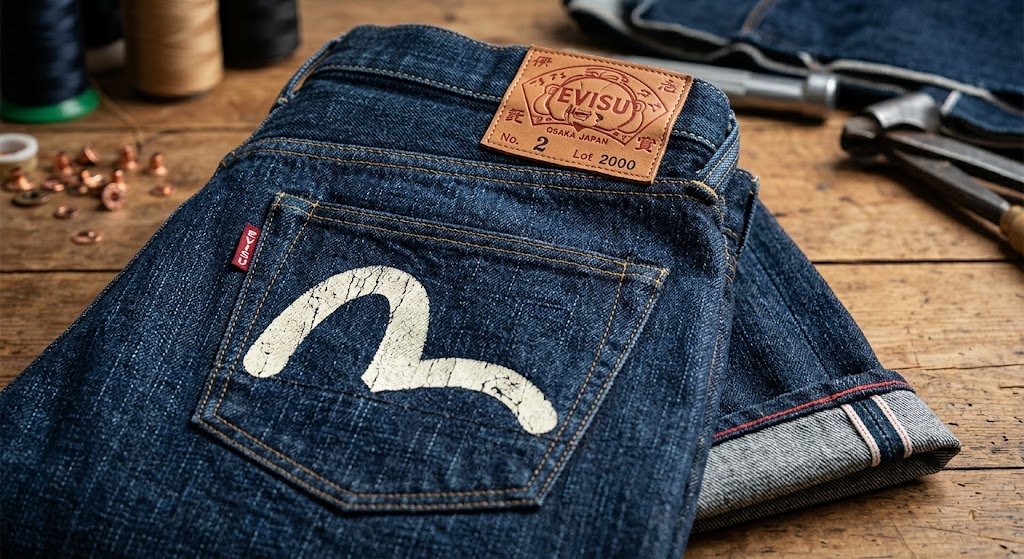
Evisu Jeans | Authentic Japanese Denim, Seagull Jeans & More represent a distinctive part of Japanese denim culture, combining traditional construction with recognizable artwork and streetwear influence. But what actually makes Evisu different from ordinary jeans?
Today, Evisu offers much more than one classic jean style. Its denim range includes different washes, silhouettes and constructions, while current collections also include Made-in-Japan pieces produced in limited quantities in Okayama.
This guide explains what makes Evisu jeans distinctive, what the Seagull logo means, how Japanese denim and selvedge construction fit into the story, how to evaluate authenticity, and what to look for when choosing a pair.
What Makes Evisu Jeans Different?
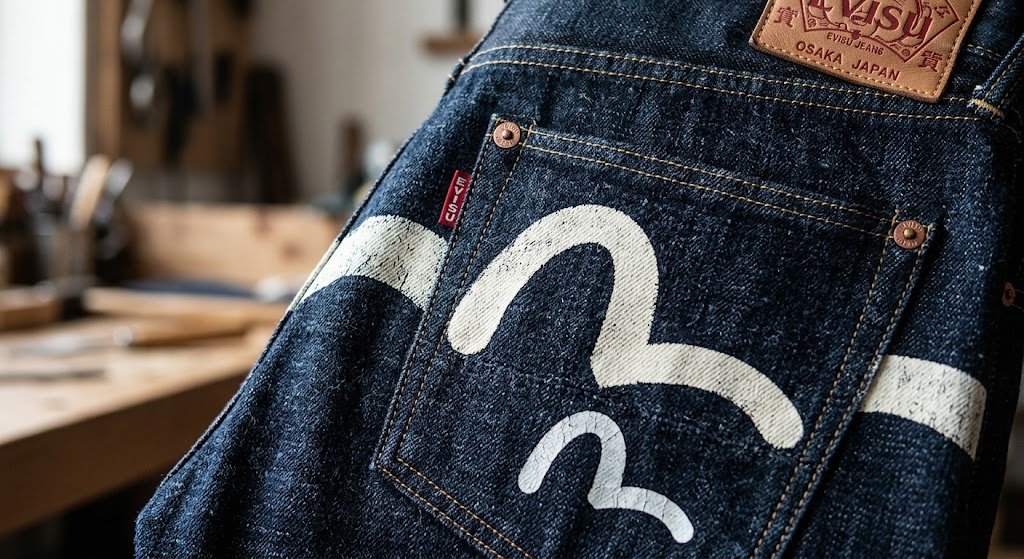
Evisu is not simply a jeans brand with a recognizable back-pocket logo. Its identity is closely connected to traditional Japanese denim production and vintage-inspired details.
According to Evisu’s own history, the company originally produced only around 14 pairs of jeans per day, with each pair receiving a hand-painted Seagull logo. That small-scale beginning helped establish the visual identity that later became associated with the brand worldwide.
Several details help explain the Evisu approach:
- Japanese denim heritage
- Selvedge construction on relevant collections
- Indigo-focused denim
- Distinctive Seagull artwork
- Vintage-inspired washes
- Multiple modern fits
- Attention to stitching, buttons and labels
Evisu also describes its denim as using specific thread thicknesses and colors for different parts of a garment, with some jeans incorporating multiple thread colors.
That combination of construction and visual design is important. A pair of Evisu jeans can function as everyday clothing, but the Seagull artwork and construction details can also make the jeans immediately recognizable.
Evisu and Authentic Japanese Denim
Where does Evisu Japanese denim come from?
Japanese denim has a particularly strong association with Okayama Prefecture, especially the Kojima and Ibara areas. The official Okayama tourism authority describes Kojima as the birthplace of domestically produced Japanese jeans and notes the region’s concentration of denim-related industries, including weaving, dyeing, sewing and washing.
This matters when discussing Evisu because not every Evisu product should automatically be described as identical in origin or construction. Product-specific details matter.
For example, current Evisu Made-in-Japan jeans are described as being produced in limited quantities in Okayama. Current examples include regular, relaxed and loose silhouettes.
That distinction is useful for shoppers: “Japanese denim” and “Made in Japan” should not be treated as interchangeable marketing phrases without checking the individual product description.
What is selvedge denim?
Selvedge denim is made using a construction that creates a finished edge at the fabric’s sides. Traditional shuttle looms weave the yarn back and forth across the fabric width, creating the characteristic self-finished edge.
Why Are Seagull Jeans So Recognizable?
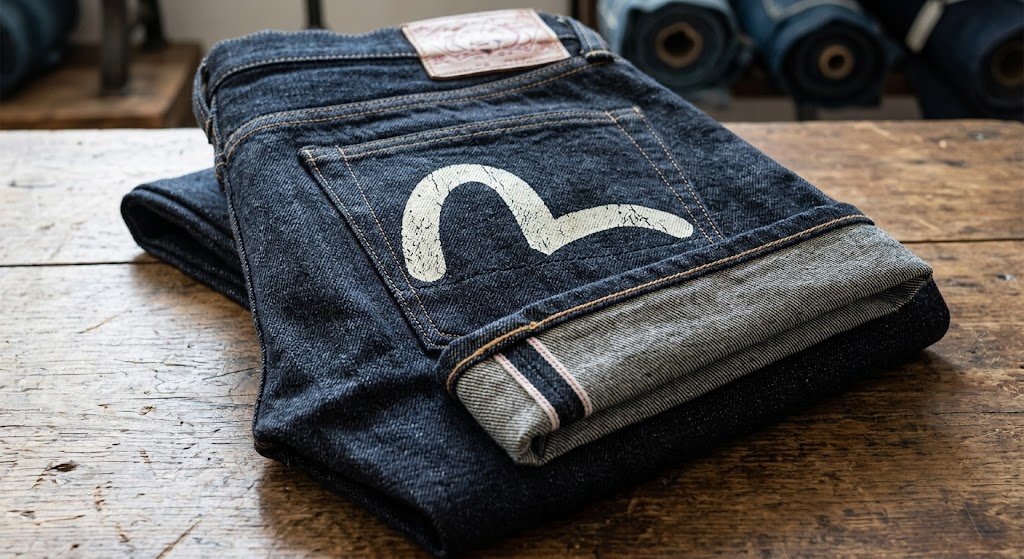
The Seagull design is arguably the most recognizable visual feature associated with Evisu.
The graphic appears across the back pockets and can be hand-painted, printed or embroidered depending on the garment and collection. Evisu describes the Seagull as a signature element connected with the craftsmanship and finishing of its jeans.
However, not every Seagull design looks exactly the same.
You may encounter:
- Large painted Seagulls
- Smaller printed Seagulls
- Embroidered designs
- Single-color graphics
- Multi-color artwork
- Seagull designs combined with Kanji
- More elaborate pocket artwork
Current Evisu products demonstrate how widely the treatment can vary. Some Made-in-Japan jeans use printed Seagulls, while other garments combine Seagull artwork with additional Japanese-inspired graphics.
This is important when identifying vintage or second-hand Evisu. A Seagull that looks different from another pair is not automatically proof that one pair is fake.
The age, collection, production period and specific model all need to be considered.
Which Evisu Jeans Fit Should You Choose?
Evisu’s current denim selection includes several silhouettes, so choosing by waist size alone is not enough.
Regular fit
A regular fit provides a more traditional straight silhouette. Evisu’s #2020 regular fit is described as a straight-leg foundation of its classic denim range.
This is a practical choice if you want the Seagull detail without an extremely oversized silhouette.
Relaxed fit
Relaxed jeans provide additional room through the body and legs. Evisu’s #2030 relaxed fit is designed with a roomier silhouette from waist toward the hem.
This works well with casual streetwear styling.
Loose fit
The #2038 loose fit provides an even wider silhouette. Evisu describes it as its most generous cut in that particular Made-in-Japan collection.
Loose Evisu jeans can work particularly well with oversized sweatshirts, jackets and wider footwear.
A simple fit rule
If you are buying online, compare the actual garment measurements with a pair of jeans you already own.
Measure:
- Waist
- Front rise
- Thigh
- Knee
- Leg opening
- Inseam
This is more reliable than assuming that a size 32 from one Evisu model will fit exactly like a size 32 from another model.
Complete Denim Sizing Guide
How Can You Tell If Evisu Jeans Are Authentic?
Authentication is one of the biggest concerns when buying older or second-hand Evisu jeans.
Online discussions show why this can be complicated. In one Reddit legit-check discussion, commenters examined details such as inner-label print quality, the patch, pocket label and stitching rather than relying on one feature alone.
A useful six-point inspection is:
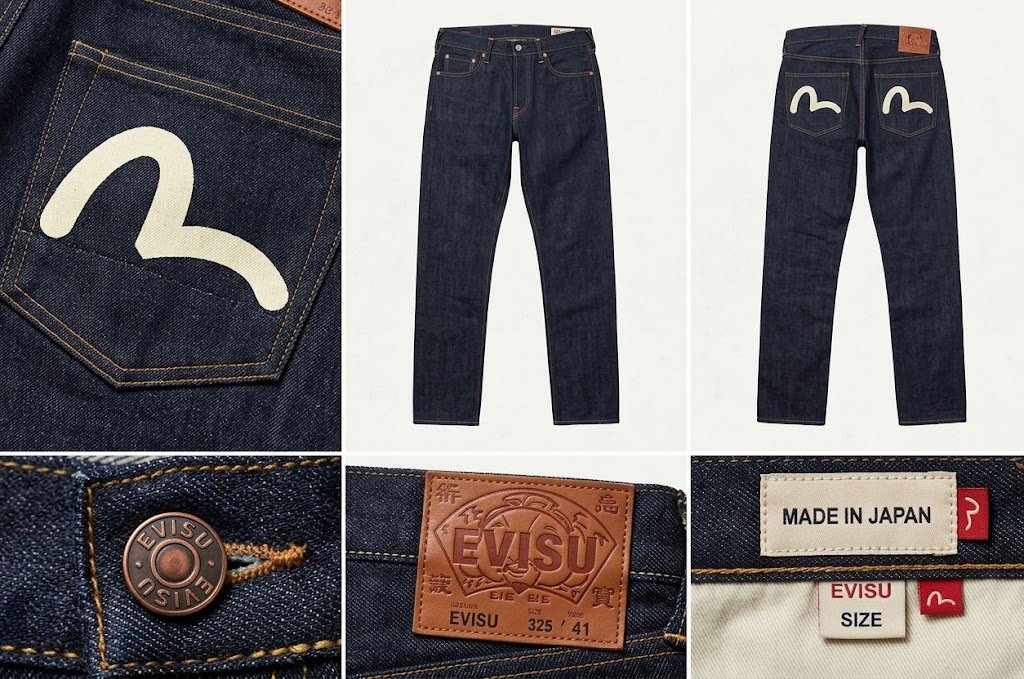
1. Check the labels
Look closely at the interior labels and patches.
Poor printing, blurry lettering, incorrect spacing or unusually low-quality materials can be warning signs. However, label differences can also exist between production periods.
2. Examine the Seagull
Look at the shape, placement, symmetry and finish of the back-pocket artwork.
Do not use one universal Seagull shape as an authenticity test because Evisu has produced different designs and treatments.
3. Inspect the stitching
Check whether stitching looks consistent and appropriate for the garment.
Uneven construction by itself does not prove a counterfeit, but several poor-quality details together should make you investigate further.
4. Look at the denim and selvedge
If the specific model is supposed to be selvedge, inspect the edge carefully.
Evisu identifies selvedge construction as an important part of its denim heritage.
5. Check buttons and hardware
Evisu describes distinctive buttons, including designs associated with specific ranges.
Compare hardware against reliable references for the exact model or production period.
6. Consider the seller and provenance
This is often overlooked.
A detailed listing with clear photos, measurements, model information and a credible purchase history gives you more information than a listing that simply says “100% authentic.”
Original practical insight: When checking a second-hand pair, treat authentication like a six-piece puzzle rather than a single-logo test. If four or five independent details make sense together, your assessment is much stronger than relying only on the Seagull.
[INTERNAL LINK: How to Identify Authentic Japanese Denim]
Buying Evisu Jeans: New vs. Second-Hand
There are two main routes for buying Evisu jeans.
Buying new
Buying directly from an official Evisu regional store gives you product information from the brand itself and makes it easier to verify the model, fit and current construction.
The current Evisu US site separates its denim selection by fit, including slim, taper, regular, relaxed, loose and wide-leg categories.
Official product pages can also specify details such as fabric composition, production location, wash and care instructions. For example, current Made-in-Japan products may identify Okayama production directly.
Buying second-hand
Second-hand Evisu can be interesting because older pieces may have different graphics, labels, washes and construction details.
However, ask for:
- Front and back photos
- Inside label photos
- Pocket close-ups
- Selvedge photos when applicable
- Button and hardware photos
- Waist and inseam measurements
- Clear photos of any wear or damage
Marketplace listings can contain a mixture of genuine and questionable items, so the listing title alone should never be your authentication method.
How Should You Care for Evisu Denim?
Good denim care depends on the exact product, but Evisu’s current product instructions show why generic “never wash your jeans” advice is too simplistic.
For one current loose-fit Made-in-Japan model, Evisu recommends hand washing cold, washing inside out, using mild detergent and hanging to dry. It also warns against bleach, dry cleaning and ironing directly on the print.
For Seagull-decorated jeans, the graphic deserves particular attention.
A practical care routine is:
- Read the product-specific care label first.
- Turn jeans inside out when washing if instructed.
- Use cold water when specified.
- Avoid bleach and harsh optical brighteners.
- Hang dry rather than exposing the garment to unnecessary heat.
- Avoid ironing directly over printed or painted artwork.
- Store denim in a dry, ventilated place.
The goal is not simply to make jeans last longer. Proper care also helps preserve the details that make an Evisu pair distinctive.
Why Japanese Denim Still Matters
Japanese denim’s appeal is not just about a country-of-origin label.
Okayama’s denim industry brings together multiple stages of production, including weaving, dyeing, sewing and washing. The region’s reputation developed through this concentration of specialized textile skills.
Denim itself is a cotton twill fabric. Traditional denim commonly uses indigo-dyed warp yarns with a natural-colored weft, creating the familiar blue face and lighter interior.
That construction helps explain why denim changes visually with wear. Friction, movement and washing can gradually alter the surface.
For Evisu collectors, this aging process can be part of the attraction: the jeans become more personal rather than simply remaining identical to their original appearance.
Raw Denim vs. Washed Denim Guide
Are Evisu Jeans Worth Understanding Before You Buy?
If your interest is purely in inexpensive everyday jeans, you may not need to study selvedge, production details or pocket artwork.
But if you are interested in Japanese denim, vintage-inspired construction or collectible streetwear, those details become much more important.
Before buying, ask yourself:
- Do I want raw, dark or washed denim?
- Which fit suits my wardrobe?
- Is the specific pair Made in Japan?
- Is the Seagull painted, printed or embroidered?
- Am I buying new or second-hand?
- Can I verify the seller and product details?
- Do I understand the care requirements?
Answering these questions first can prevent the most common buying mistake: choosing jeans because the logo looks impressive without checking the actual model, fit and construction.
Final Thoughts on Evisu Jeans
Evisu’s appeal comes from the combination of Japanese denim heritage, distinctive Seagull artwork and detailed construction. Founded in Osaka in 1991, the brand developed from a small-scale denim operation into an internationally recognized name while maintaining a strong connection to its original visual identity.
For today’s buyer, the most useful approach is to look beyond the logo. Check the fabric, construction, fit, production details, labels and care instructions. If you are shopping second-hand, evaluate several authentication clues together instead of relying on one feature.
Whether you are discovering Japanese denim for the first time or researching an older Seagull pair, understanding these details makes it much easier to appreciate what you are actually buying.
Ready to explore more Japanese denim?