

Evisu Jeans Price Guide: What You’re Really Paying For

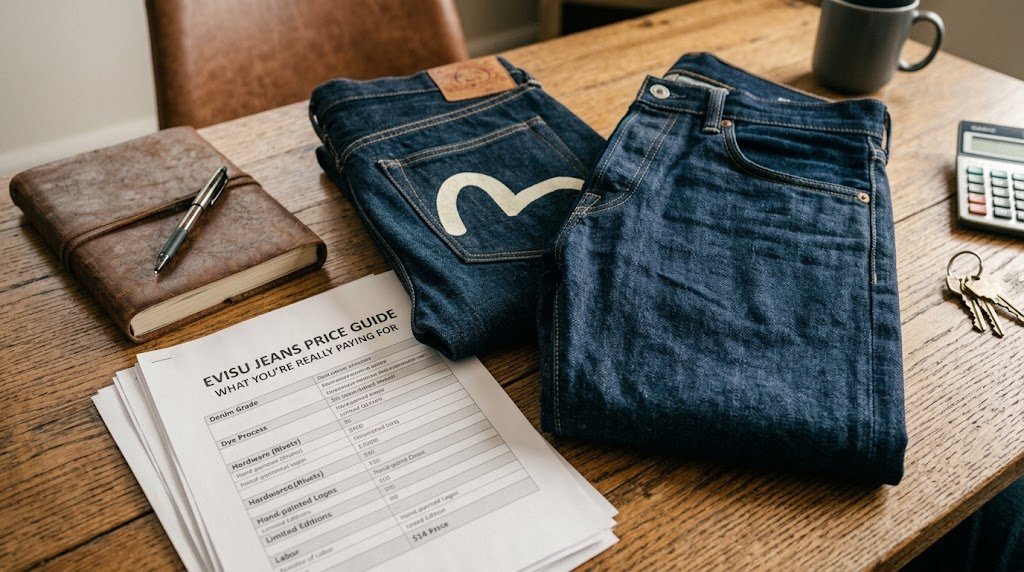
Evisu Jeans Price Guide: What You’re Really Paying For is useful if you’ve ever looked at a pair of Evisu jeans and wondered why the price can be dramatically higher than ordinary denim. The answer isn’t simply the seagull logo.
Evisu sits in a distinctive part of the denim market where design, Japanese heritage, construction, detailing, limited releases, and brand identity can all influence the final price. Current official Japanese listings show examples ranging from roughly ¥39,050 to ¥67,650, while individual models and collections can vary considerably.
For an American shopper, however, the important question isn’t just “How much are Evisu jeans?” It’s “What am I getting for the money?”
This guide breaks down the major price factors, explains why some pairs cost more than others, and gives you a practical framework for deciding whether a particular pair represents good value.
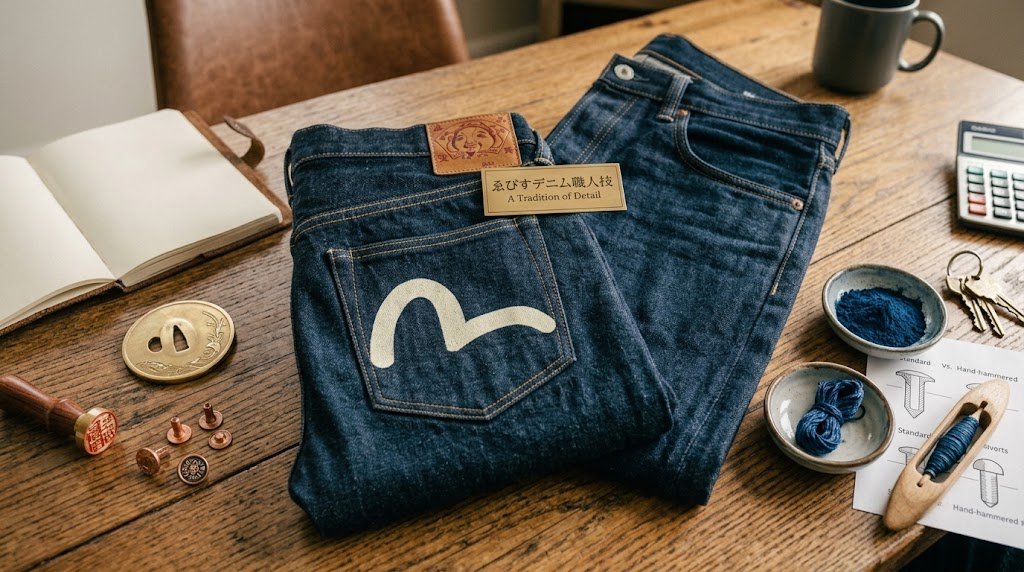
What Do Evisu Jeans Cost in 2026?
There isn’t one universal Evisu price because the brand sells different fits, washes, designs, collections, and levels of detailing.
As a current reference point, official Evisu Japan listings show:
| Example | Listed price |
|---|---|
| Classic 5-Pocket Jeans | ¥39,050 |
| Yellow Seagull Classic Relax Fit Jeans #2030 | ¥41,800 |
| Heavy Washed and Distressed Jeans | ¥46,282 sale price |
| Light-washed Seagull Print Regular Fit #2020 | ¥60,500 |
| Black Washed Seagull Print Regular Fit #2020 | ¥67,650 |
These are Japanese-site retail examples rather than a fixed U.S. price list, and exchange rates, shipping, taxes, promotions, and availability can change what an American buyer ultimately pays.
The practical takeaway is simple:
Evisu pricing is strongly product-specific. A relatively straightforward pair can sit considerably below a heavily decorated, distressed, limited, or premium Japanese-made design.
Why Are Evisu Jeans So Expensive?
The price of Evisu denim comes from several different factors rather than one single manufacturing detail.
1. Denim construction
Japanese denim has a long association with traditional weaving techniques and carefully controlled fabric production. Certain Evisu collections emphasize Japanese-made construction, vintage-inspired denim, and distinctive finishing.
However, don’t assume that every pair carrying the Evisu name has exactly the same construction.
That is one of the most important lessons when researching Evisu jeans: check the individual product description rather than judging the entire brand by one famous pair.
2. The seagull detail
The signature seagull, or kamome, is arguably Evisu’s most recognizable design element.
Depending on the model, the rear-pocket treatment can be painted, embroidered, printed, appliquéd, or incorporated into a more elaborate design.
That matters because a simple pair and a heavily embellished pair can have very different production requirements.
3. Washing and finishing
A pair of clean, dark denim jeans requires a different finishing process from heavily washed or distressed denim.
Evisu’s current range includes dark washes, light washes, distressed designs, patchwork, embroidery, and other decorative treatments. The official Japanese store, for example, currently lists both regular-fit Seagull Print jeans and distressed styles.
The more elaborate the finish, the more difficult it becomes to compare prices using fabric alone.
4. Design and brand identity
Part of what you’re paying for is Evisu’s distinctive visual language.
The brand doesn’t try to make anonymous five-pocket jeans. Large seagulls, embroidery, graphics, washes, Japanese-inspired details, and streetwear silhouettes are often intentionally visible.
For some buyers, that’s the main attraction.
For others, it means a simpler Evisu model may offer better value because more of the budget goes toward the denim rather than elaborate decoration.
Evisu Jeans Price Guide: What Changes the Price?
When comparing two pairs, look beyond the number on the price tag.
Fabric
Fabric weight, composition, weave, and finishing can affect both feel and price.
Heavier denim isn’t automatically better. A 14-ounce fabric isn’t inherently inferior to a 16-ounce fabric; the better choice depends on how you want the jeans to feel and wear.
Fit
Evisu’s current men’s denim navigation includes multiple silhouettes such as slim, taper, regular, relaxed, loose, and wide-leg options.
A more expensive pair isn’t necessarily better if the cut doesn’t work for your wardrobe.
Decoration
This is an especially important price variable.
Compare:
- Plain back-pocket construction
- Printed seagull
- Embroidered seagull
- Large multi-color graphics
- Patchwork
- Distressing
- Special embroidery or appliqué
Two pairs can use comparable denim while looking completely different because the finishing and decoration are different.
Collection and availability
New collections, limited releases, collaborations, and harder-to-find sizes can command different prices.
That also explains why secondhand prices don’t always follow original retail prices.
Is Evisu Worth the Price?
Evisu can be worth the price if you specifically value its design, construction, Japanese denim heritage, and distinctive detailing.
But “worth it” is personal.
Consider a simple example.
Suppose you have a $450 clothing budget. You could spend the entire amount on one highly decorated pair, or you could choose a simpler Evisu model and keep the remainder for another wardrobe item.
The expensive pair isn’t automatically the smarter purchase.
A useful way to evaluate Evisu is to divide the price into four questions:
- Do I like the fit?
- Do I like the fabric and finish?
- Will I wear the design frequently?
- Would I still want the jeans without the brand name?
If you answer yes to all four, the price becomes easier to justify.
A useful value calculation
Here’s an original practical way to look at the purchase:
Cost per wear = purchase price ÷ realistic number of wears.
A $400 pair worn 100 times costs about $4 per wear. If you wear it 200 times, that falls to $2 per wear.
This doesn’t prove that an expensive pair is a better investment. It simply changes the question from “Why does this cost $400?” to “Will I actually wear it enough to make the purchase worthwhile?”
That is often a much more useful question for shoppers.
Evisu Jeans vs. Ordinary Denim: What Are You Actually Buying?
A $40 pair of jeans and a $400 pair aren’t necessarily ten times different in every measurable characteristic.
The comparison needs more nuance.
With Evisu, you may be paying for a combination of:
- Distinctive Japanese-inspired design
- Premium or specialty denim on particular models
- Detailed finishing
- Signature seagull branding
- Embroidery and decorative work
- Specific fits and silhouettes
- Brand heritage
- Collection exclusivity
- Construction and quality-control considerations
Meanwhile, an inexpensive pair may prioritize mass production, straightforward styling, and broad availability.
Neither approach is automatically right or wrong.
The difference is what the manufacturer is optimizing for.
If you want an understated everyday jean, paying substantially more for elaborate detailing may not make sense. If you specifically want Evisu’s recognizable aesthetic, a cheaper alternative may miss the entire point of the purchase.
How to Tell if an Evisu Pair Is a Good Value
Before purchasing, work through this checklist.
Check the exact model
Don’t compare “Evisu jeans” as if every model were identical.
Record the:
- Model name or number
- Fit
- Fabric description
- Wash
- Country of manufacture
- Decorative details
- Current retail price
Official Evisu product pages provide model information and product details, making them a useful starting point for comparison.
Check the fit before the logo
Fit is one of the easiest places to waste money.
A beautiful pair that doesn’t fit correctly will probably spend more time in your closet than on your legs.
Pay particular attention to:
- Waist
- Rise
- Thigh
- Knee
- Leg opening
- Inseam
If measurements are provided, compare them with a pair of jeans you already own rather than relying solely on a generic size label.
Examine the details
Look closely at the photographs and product description.
Ask:
- Is the seagull painted or embroidered?
- Is the denim washed or raw-looking?
- Are there patches or appliqués?
- Is the pair distressed?
- Is it part of a special collection?
- Is it identified as Made in Japan?
Those details can explain significant differences between models.
Are More Expensive Evisu Jeans Better?
Not necessarily.
This is where many denim buyers make a mistake.
A higher price can indicate more decoration, a different collection, greater scarcity, or more complex finishing. It does not automatically mean the jeans will fit better or last longer.
For example, Evisu’s current Japanese catalog includes a classic five-pocket model listed at ¥39,050, while a black washed Seagull Print regular-fit model is listed at ¥67,650.
That’s a substantial difference.
But the more expensive pair may appeal to you because of its visual treatment—not because you need more durable jeans.
Buy the feature you actually value.
If you care about a distinctive Seagull design, pay for that. If you care mainly about fabric and fit, prioritize those specifications instead.
Evisu Jeans and Resale Value
Resale value is another reason prices can vary.
Secondhand Evisu listings can contain everything from ordinary used jeans to rare vintage pieces and sought-after designs. Marketplace prices should therefore be treated as asking prices, not guaranteed selling prices.
When evaluating a secondhand pair, look for:
- Exact model identification
- Condition
- Size
- Original retail price
- Current availability
- Wash and fading
- Pocket artwork
- Tags and labels
- Evidence of authenticity
A rare pair in an unusual size may attract collectors, while a common model with significant wear may sell for much less.
For that reason, don’t buy Evisu solely because you expect it to appreciate.
Buy it because you actually like the jeans.
How to Buy Authentic Japanese Denim
Evisu Jeans Price Guide: New vs. Used
New Evisu jeans
Advantages:
- Known purchase history
- Current sizing information
- Original condition
- Easier product verification
- Access to current collections
Potential disadvantages:
- Higher retail price
- Shipping and taxes for international purchases
- Some releases may sell out
Used Evisu jeans
Advantages:
- Potentially lower price
- Broken-in denim
- Existing fades
- Access to discontinued models
Potential disadvantages:
- Unknown washing history
- Alterations
- Wear or damage
- Sizing uncertainty
- Authentication concerns
For used denim, condition can matter more than the original retail price.
A $500 pair that has been heavily altered isn’t necessarily a better purchase than a $250 pair in excellent condition.
Where Should You Buy Evisu Jeans?
For the safest price comparison, begin with official Evisu stores and product pages. The Japanese official site currently lists men’s jeans by fit and collection and provides individual product information.
For secondhand purchases, investigate the seller carefully and compare the exact model rather than relying on generic “Evisu jeans” searches.
Be especially cautious when a supposedly rare pair is dramatically cheaper than comparable listings.
A low price isn’t automatically a bargain.
How Much Should You Spend on Evisu Jeans?
A reasonable approach is to establish your budget before looking at individual designs.
For example:
Under $250
Focus on sales, simpler designs, older releases, or carefully selected secondhand pairs.
Around $250–$400
This can be a practical range for shoppers looking for premium Evisu styling without moving into the most expensive designs.
$400+
At this level, ask what specifically justifies the additional money.
Is it:
- A special fabric?
- Japanese manufacture?
- Extensive embroidery?
- A limited release?
- Unusual construction?
- A design you genuinely love?
If you can’t identify the reason, pause before buying.
Current official Japanese pricing demonstrates why this question matters: several current men’s models fall around ¥40,000–¥68,000, but their features differ significantly.
Final Verdict: What You’re Really Paying For
The real value of Evisu jeans isn’t contained in one ingredient.
You’re paying for a combination of denim, construction, design, finishing, cultural identity, and brand-specific detailing. The exact balance changes from one model to another.
That’s why the best Evisu purchase isn’t necessarily the most expensive one.
Choose the pair whose fit, fabric, details, and design match how you actually dress. Verify the exact model, compare current retail prices, inspect secondhand condition carefully, and don’t assume a higher price automatically means better quality.
For shoppers who appreciate distinctive Japanese denim and Evisu’s signature aesthetic, the premium can make sense. For someone who simply needs a basic everyday jean, there are less expensive options that may deliver better practical value.
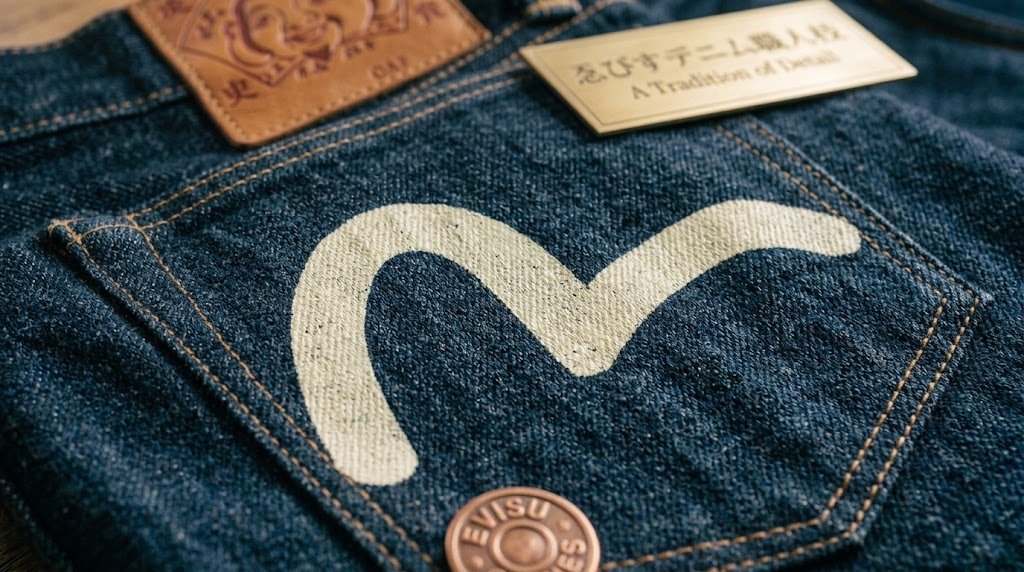
[IMAGE: Evisu jeans styled as premium Japanese streetwear with close-up denim details]
Alt text: Evisu Jeans Price Guide: What You’re Really Paying For in premium Japanese streetwear
Want to compare more denim options before buying?
Best Evisu Jeans for Men in 2026
3. FAQ Section
How much do Evisu jeans cost?
Evisu prices vary by model, collection, fabric, wash, and decoration. Current official Japanese listings include men’s jeans from about ¥39,050 to ¥67,650, with prices changing by product and promotion.
Why are Evisu jeans so expensive?
The price can reflect specialized denim, construction, detailed washing, embroidery or Seagull artwork, collection positioning, Japanese production on certain models, and Evisu’s established brand identity.
Are Evisu jeans worth the money?
They can be worth it if you value the specific fit, denim, craftsmanship, and distinctive Evisu design. The most expensive model isn’t automatically the best value.
Are Evisu jeans made in Japan?
Some Evisu products and collections are identified as Made in Japan, but buyers should check the individual product description and garment labeling rather than assuming every Evisu item has the same country of manufacture.
Do Evisu jeans hold their value?
Some rare or desirable Evisu models may attract collectors, but resale value depends heavily on model, condition, size, authenticity, and demand. Buying solely for investment potential is risky.
What should I check before buying Evisu jeans?
Check the exact model, measurements, fit, fabric, country of manufacture, seagull detailing, condition, seller reputation, and total delivered cost. For used jeans, inspect photographs carefully for alterations and wear.